






What's Happening?
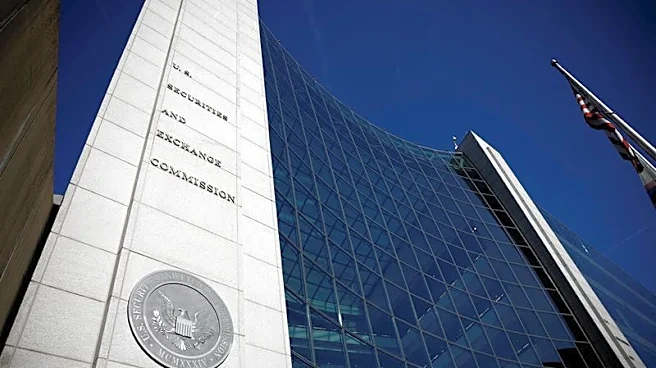
The Securities and Exchange Commission (SEC) has filed charges against multiple private fund advisers for allegedly misappropriating millions of dollars from investors. These investors believed their funds were being used to purchase pre-IPO shares in high-profile
technology companies like OpenAI and SpaceX. In two separate cases announced on Wednesday, the SEC claims that fund advisers deceived investors, including Navy veterans, about the actual use of their money. One case involves Owen Meyer and his firm, Meyer Global Management, accused of raising at least $18.5 million from nearly 100 investors and misappropriating at least $1.27 million. Meyer allegedly spent investor funds on personal entertainment, including strip clubs, and transferred money for landscaping and personal investments. The second case charges former naval officer Christopher Dinelli and Jacob Frankel of Beyond Alpha Ventures with defrauding 35 investors of over $8.7 million, falsely claiming holdings in SpaceX and xAI, and losing significant amounts in options trading. Neither OpenAI nor SpaceX, nor their executives, are accused of wrongdoing.
Why It's Important?
These SEC charges underscore significant risks within the private equity and pre-IPO investment landscape, particularly for individual investors seeking access to high-growth tech companies. The alleged fraud highlights vulnerabilities in investor protection and the potential for exploitation when dealing with less regulated private markets. This situation could lead to increased scrutiny from regulatory bodies like the SEC on private fund advisers and their marketing practices, potentially resulting in stricter regulations or enhanced enforcement actions. For the broader financial industry, it serves as a cautionary tale about due diligence and transparency in investment offerings. For investors, it emphasizes the critical need for thorough research and verification of investment opportunities, especially those promising access to exclusive pre-IPO shares, to avoid falling victim to fraudulent schemes. The involvement of Navy veterans as victims also raises concerns about targeted exploitation of specific demographic groups.
What's Next?
The SEC will pursue its cases against Owen Meyer, Christopher Dinelli, and Jacob Frankel in federal court, seeking to bar them from the industry, disgorgement of ill-gotten gains, and penalties. These legal proceedings will determine the extent of their liability and potential restitution for the defrauded investors. The outcomes of these cases could set precedents for how similar pre-IPO investment schemes are prosecuted in the future. Regulators may also consider implementing new rules or strengthening existing ones to enhance transparency and investor protection in private markets, particularly concerning the marketing and sale of pre-IPO shares. Investors are likely to be advised to exercise extreme caution and conduct extensive due diligence before committing funds to private investment opportunities, especially those that appear too good to be true or lack clear, verifiable documentation of asset holdings.
Beyond the Headlines
Beyond the immediate legal and financial implications, these cases shed light on the psychological and social dynamics of investment fraud. The allure of high returns and exclusive access to burgeoning tech giants like SpaceX and OpenAI can override rational decision-making, particularly for individuals without extensive financial expertise. The alleged targeting of Navy veterans by Dinelli also points to a disturbing trend of exploiting trust within specific communities. This situation could erode public trust in certain segments of the financial industry and highlight the need for greater financial literacy and awareness campaigns. It also raises questions about the responsibility of platforms and intermediaries in vetting investment opportunities and preventing fraudulent solicitations, especially in the rapidly evolving landscape of private market investments. The long-term impact could be a more cautious and skeptical investor base, demanding higher levels of transparency and accountability from private fund managers.