







What's Happening?
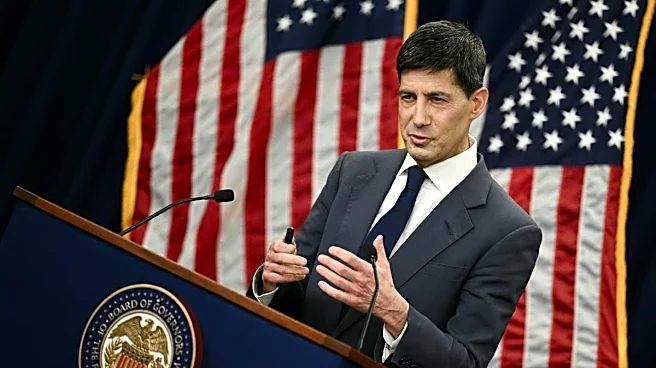
In recent U.S. trading, spot gold and silver prices have experienced a significant decline. This downturn is attributed to the Federal Reserve's recent rate positioning, which has created a firmer dollar backdrop. The Federal Reserve maintained its funds-rate
target between 3.50% and 3.75%, with projections indicating a potential increase to 3.8% by 2026. This has shifted market focus towards real yields and inflation data, impacting gold's appeal as a hedge. Additionally, geopolitical developments, such as increased ship traffic in the Strait of Hormuz following an interim deal, have contributed to a disinflationary market impact, further affecting gold's haven status. U.S. equity futures have also pointed lower, reflecting a cooling of an eight-day risk rally.
Why It's Important?
The decline in gold and silver prices highlights the influence of Federal Reserve policies and the strength of the U.S. dollar on precious metals markets. As the Fed signals a potential rate hike, investors are adjusting their strategies, impacting demand for gold as a safe-haven asset. The geopolitical situation in the Middle East, particularly the Strait of Hormuz, also plays a role in market dynamics, affecting crude oil prices and, consequently, inflation expectations. These developments have broader implications for investors and policymakers, as they navigate the interplay between monetary policy, geopolitical tensions, and market stability.
What's Next?
The upcoming May PCE inflation report will be a critical factor in determining the future trajectory of gold and silver prices. A persistent core inflation reading could reinforce the Fed's higher-for-longer rate stance, maintaining pressure on precious metals. Conversely, a softer inflation print might alleviate some of the downward pressure. Market participants will closely monitor these developments, as well as ongoing geopolitical negotiations, to assess their impact on inflation expectations and investment strategies.