



What's Happening?
The Swift at Petworth in Washington, D.C., is introducing a new studio apartment design, the S2, which aims to redefine traditional studio living. This particular layout, spanning 558 square feet, features a distinct, separate sleeping area, moving away
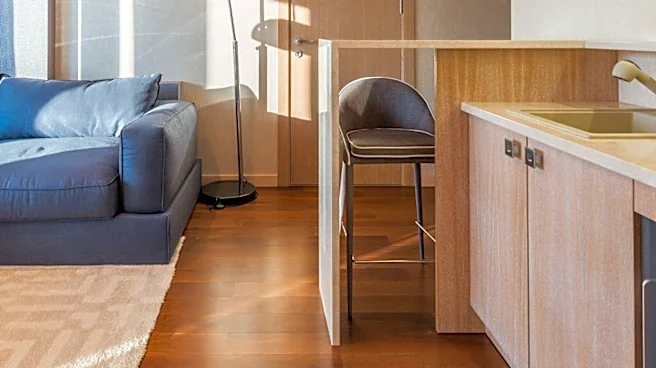
from the open-concept design where the bed is integrated into the main living space. The S2 unit includes a modern entryway and kitchen, a spacious 19-foot living area offering flexibility for lounge, dining, or work-from-home setups, and an 11-foot dedicated sleeping space for enhanced privacy. The kitchen is streamlined with modern appliances, a dishwasher, and an in-home washer and dryer. Additionally, the apartments boast generous closet space and a full bathroom, with the overall design focusing on maximizing every square foot for functionality and comfort. This approach addresses a common concern in studio apartments where the bed often feels too exposed or integrated into the living area.
Why It's Important?
This development is significant for the urban housing market, particularly in densely populated areas like Washington, D.C., where studio apartments are a common housing solution. By offering a separate sleeping area, The Swift at Petworth addresses a key desire for many renters: the feeling of a more defined and private living space within a smaller footprint. This design innovation could set a new standard for studio apartment layouts, potentially influencing future residential developments to prioritize functional separation over purely open-plan designs. For residents, it means an improved quality of life, as the distinction between sleeping and living zones can enhance comfort, privacy, and the overall perception of space. This could also attract a broader demographic to studio living, including those who previously found traditional studios too restrictive or lacking in privacy, thereby impacting rental market trends and demand for specific apartment configurations.
What's Next?
The introduction of the S2 layout at The Swift at Petworth could lead to increased interest and demand for these types of thoughtfully designed studio apartments. Other developers in urban centers might observe the success of this model and begin incorporating similar features into their own studio offerings, potentially leading to a broader trend of 'redefined' studio living. Prospective tenants in Petworth and surrounding D.C. neighborhoods will likely evaluate these new layouts as they seek housing that balances affordability with enhanced living quality. The market will watch to see if this design becomes a benchmark for future studio apartment construction, influencing architectural and interior design choices in compact urban dwellings. The emphasis on distinct zones within a studio could also spur innovation in furniture design and space-saving solutions tailored to these evolving apartment layouts.
Beyond the Headlines
The shift towards studios with separate sleeping areas reflects a deeper societal trend: the increasing value placed on personal space and privacy, even within compact living environments. In an era where remote work is more prevalent, the need for distinct zones for work, rest, and leisure within one's home has become paramount. This design evolution in studio apartments acknowledges that while urban living often necessitates smaller spaces, it doesn't have to compromise on the psychological benefits of having clear boundaries between different life activities. It also highlights a growing consumer expectation for intelligent design that maximizes utility and comfort, rather than simply minimizing square footage. This could lead to a re-evaluation of what constitutes 'luxury' or 'desirable' in small-space living, moving beyond mere aesthetics to focus on functional and psychological well-being.