







What's Happening?
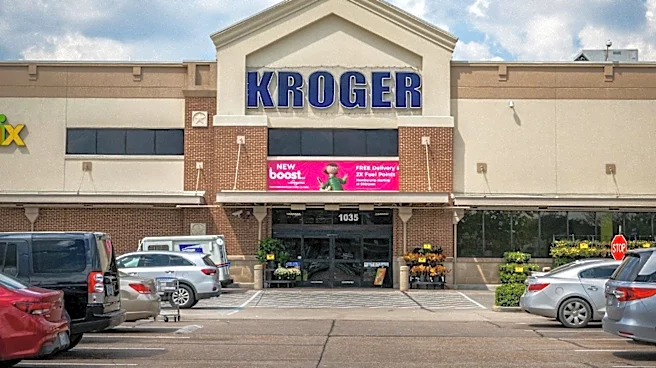
UFCW Local 455, representing Kroger workers in Houston and Louisiana, has successfully negotiated a reduction in the weekly hour requirement for healthcare eligibility from 27 hours to 24 hours. This change, secured after extensive negotiation sessions
and a ratified contract, aims to make healthcare coverage more accessible for bargaining unit workers. For two decades, Kroger employees in Local 455 were eligible for healthcare after averaging 20 hours per week. However, in 2018, Kroger began pushing for a national standard of 27 hours or more, which led to thousands of workers losing their healthcare benefits. The implementation of the 27-hour requirement in 2021 made it difficult for many employees to secure enough hours, impacting their ability to re-enroll for coverage. The new 24-hour requirement, effective for 2025 enrollment, has already shown an increase in eligible workers.
Why It's Important?
This reduction in healthcare eligibility hours is a significant victory for Kroger workers represented by UFCW Local 455, directly addressing a critical issue that has affected thousands of employees and their families. The previous 27-hour requirement, implemented by Kroger, created barriers to healthcare access, forcing many workers to choose between maintaining their benefits and the availability of sufficient work hours. The new 24-hour threshold will enable more employees to qualify for healthcare coverage, improving their financial security and overall well-being. This development highlights the ongoing importance of union negotiations in advocating for worker benefits and counteracting corporate objectives that may prioritize cost-cutting over employee welfare. It also underscores the broader national conversation about healthcare access and the role of employers in providing comprehensive benefits.
What's Next?
The 24-hour eligibility requirement for healthcare benefits is now in effect for 2025 enrollment, and the union anticipates a continued increase in the number of workers qualifying for coverage. UFCW Local 455 will likely monitor the implementation of this new standard to ensure compliance and assess its long-term impact on member healthcare access. This successful negotiation could also serve as a precedent or inspiration for other UFCW locals across the country in their own bargaining efforts with Kroger, potentially leading to similar reductions in healthcare eligibility hours nationwide. The ongoing dialogue between unions and corporations regarding employee benefits will remain a key aspect of labor relations in the retail sector.
Beyond the Headlines
The struggle over healthcare eligibility hours at Kroger reflects a deeper tension between corporate profitability and employee welfare in the U.S. labor market. The company's initial push for a higher hour requirement, while potentially aimed at cost control, had significant human consequences, stripping thousands of workers of essential benefits. The union's successful negotiation to lower this threshold demonstrates the power of collective bargaining in mitigating such impacts and ensuring a more equitable distribution of corporate success. This situation also brings to light the broader challenges faced by part-time and hourly workers in accessing affordable healthcare, a systemic issue that extends beyond Kroger to many industries. The outcome in Houston and Louisiana could influence public perception of corporate responsibility and the role of unions in shaping employment standards.