



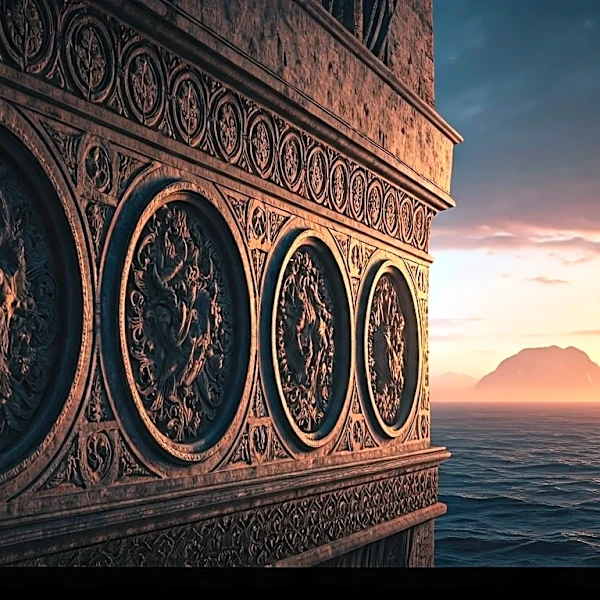





What's Happening?
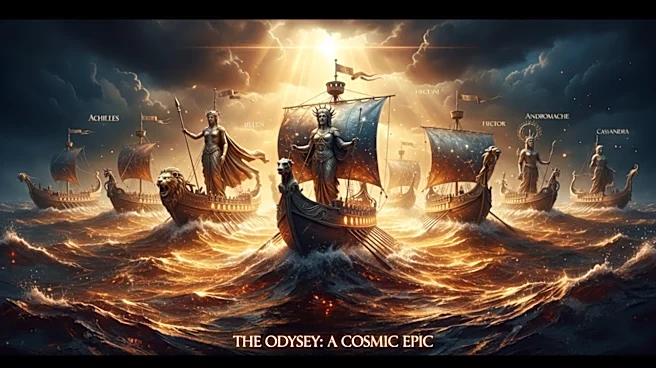
Christopher Nolan has adapted Homer's epic 'The Odyssey' into a film, utilizing IMAX cameras to capture the grandeur of the story. Known for his complex narratives and visual storytelling, Nolan's version of 'The Odyssey' features a non-linear narrative structure,
interweaving the adventures of Odysseus with the experiences of his family awaiting his return. The film stars Matt Damon as Odysseus, with Anne Hathaway and Tom Holland in supporting roles. Nolan's adaptation is noted for its visual spectacle and thematic depth, drawing comparisons to his previous works like 'Tenet' and 'Oppenheimer.' The film's use of real-world locations and IMAX technology aims to enhance the epic's immersive experience.
Why It's Important?
Nolan's adaptation of 'The Odyssey' represents a significant contribution to contemporary cinema, blending classical storytelling with modern filmmaking techniques. By employing IMAX technology and a non-linear narrative, Nolan seeks to offer audiences a fresh perspective on a well-known story. This approach not only showcases the potential of cinematic innovation but also highlights the enduring relevance of classical literature in modern media. The film's release is likely to influence future adaptations of literary works, encouraging filmmakers to explore new ways of storytelling. Additionally, the project underscores the importance of visual and thematic coherence in creating impactful cinematic experiences.