




What's Happening?
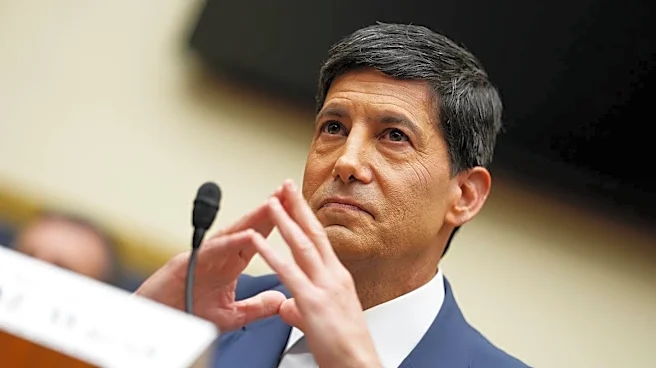
Federal Reserve Chairman Kevin Warsh has emphasized three key phrases in his public appearances: 'family fight,' 'first principles,' and 'inflation is a choice.' These phrases suggest a potential shift in the Fed's approach to monetary policy. Warsh advocates
for rethinking the Fed's dual mandate of price stability and maximum employment without preconceived notions. He encourages open debate within the Federal Open Market Committee (FOMC) to improve decision-making processes. Warsh's focus on 'first principles' indicates a desire to revisit fundamental economic principles and question existing assumptions in monetary policy.
Why It's Important?
Warsh's emphasis on 'first principles' and open debate could lead to significant changes in the Fed's policy framework. By challenging existing assumptions, the Fed may adopt new approaches to achieving its goals, potentially impacting interest rates, inflation targets, and economic growth. Warsh's leadership style contrasts with previous Fed chairs, suggesting a more dynamic and flexible approach to policy-making. These changes could influence financial markets, investor confidence, and economic stability, as stakeholders adjust to potential shifts in the Fed's strategy.
What's Next?
As Warsh continues to promote open debate and a return to 'first principles,' the Fed may explore new policy tools and frameworks. The impact of these changes will depend on the Fed's ability to effectively communicate its strategy and manage market expectations. Stakeholders will closely monitor Warsh's public statements and FOMC meetings for insights into the Fed's evolving approach. The potential for policy shifts will require investors, businesses, and policymakers to remain adaptable and responsive to changes in the economic landscape.