




What's Happening?
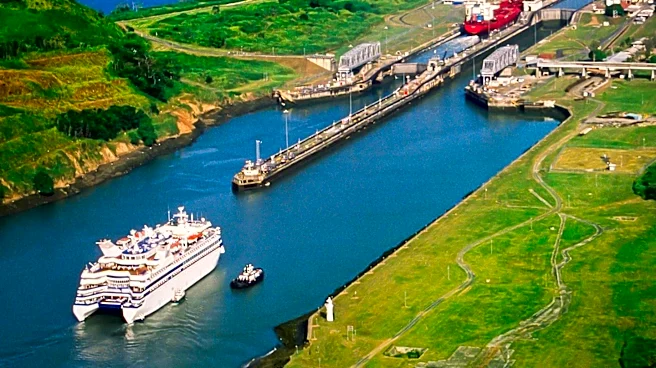
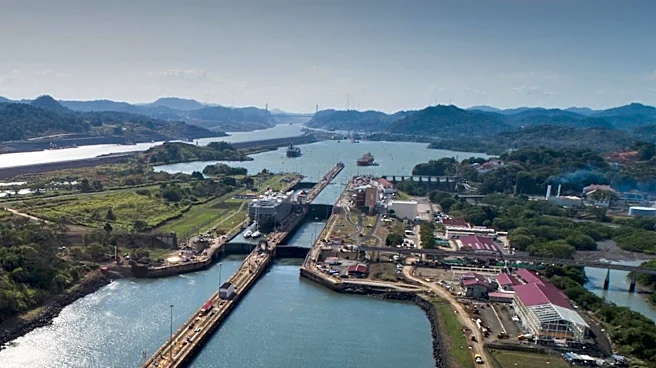
The Panama Canal Authority (ACP) is implementing additional restrictions on vessel transits due to severe drought conditions exacerbated by the El Niño phenomenon. Effective September 3, the number of daily slots at the Neopanamax locks will be adjusted
to nine, and at the Panamax locks, slots will be reduced to 25. A further reduction to 23 slots is scheduled for September 15. This marks a significant decrease from the normal daily average of 34 transits. The ACP stated that despite the arrival of the rainy season and existing water-saving measures, current watershed conditions necessitate these actions to ensure the long-term sustainability of transit operations. The canal is also reorganizing its daily auction system, splitting vessels into four commodity groups to promote a more equitable allocation process that better reflects market composition.
Why It's Important?
These new restrictions on Panama Canal transits are expected to have a substantial impact on global shipping, particularly for routes connecting Asia to the U.S. East Coast. Freight rates for Asia-USWC (U.S. West Coast) are already surging, with Shanghai-Los Angeles and Shanghai-New York spots climbing 9% week-on-week. The reduced capacity through the canal will likely lead to increased transit times and higher shipping costs, as carriers may need to seek alternative, longer routes or pay premium prices for limited slots. This could affect supply chains for various industries, potentially leading to delays in product delivery and increased consumer prices. The situation highlights the vulnerability of global trade to environmental factors and the critical role of key maritime passages.
What's Next?
The Panama Canal Authority's new slot allocation system, which categorizes vessels into four commodity groups, aims to manage the reduced capacity more efficiently. However, congestion is already building at the canal's mouth, with reports of delays up to 10 days for eastbound transits and over 112 vessels waiting to enter. Shippers are actively looking for ways to circumvent these restrictions, which could further drive up rates on alternative routes. The long-term sustainability of transit operations remains a concern, as the effectiveness of these measures in mitigating the drought's impact will depend on future rainfall patterns and the severity of the El Niño event. Businesses reliant on the Panama Canal will need to adapt their logistics strategies to account for potential ongoing disruptions and increased costs.
Beyond the Headlines
The ongoing challenges at the Panama Canal underscore the broader implications of climate change and extreme weather events on critical global infrastructure and trade. The reliance on artificial lakes for the canal's operation makes it particularly susceptible to drought, highlighting the need for resilient infrastructure planning in the face of environmental shifts. The surge in shipping costs and potential delays could prompt a re-evaluation of global supply chain strategies, encouraging diversification of routes and potentially nearshoring or reshoring production to reduce dependence on vulnerable transit points. This situation also brings to light the economic and geopolitical significance of such waterways, as disruptions can have ripple effects across international markets and influence trade relationships.