






What's Happening?
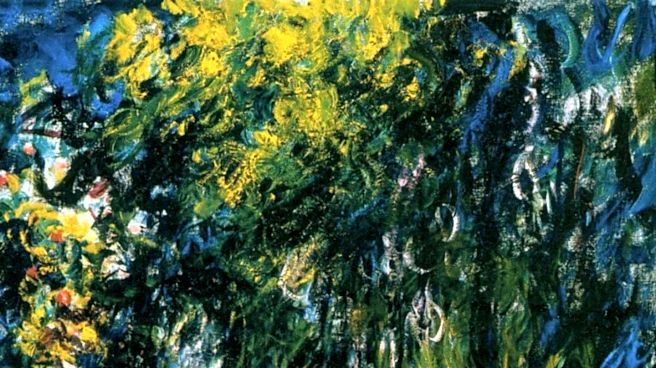
Claude Monet's iconic 'Water Lilies' series, comprising approximately 250 oil paintings, depicts the water lily pond at his garden in Giverny, France. These works were created between 1896 and 1926. The most celebrated display of this series is the 'Grandes
Décorations' cycle, housed in two purpose-built oval rooms at the Musée de l'Orangerie in Paris, France. Monet gifted this cycle to the French state, and it opened to the public in 1927, following his death. Individual 'Water Lilies' paintings are also distributed across various collections in Europe, North America, and Japan, including institutions like the Art Institute of Chicago and MoMA in New York. Monet specifically designed the lily pond garden at Giverny as a subject for his art, employing gardeners to maintain it and constructing a large studio nearby to accommodate his extensive canvases. As his health and eyesight declined in his later years, the garden became his primary focus, offering a controlled environment for his artistic observations.
Why It's Important?
The 'Water Lilies' series holds significant importance in the history of Western painting as the most extended meditation on a single subject. Its creation reflects Monet's dedication to capturing the nuances of light, color, and reflection, pushing the boundaries of Impressionism. The series' distribution across major museums globally ensures its accessibility to a wide international audience, contributing to its enduring cultural impact. The 'Grandes Décorations' at the Musée de l'Orangerie, in particular, offers an immersive experience, demonstrating Monet's vision for how his art should be viewed. This artistic endeavor also highlights the profound connection between an artist and their environment, as Monet meticulously cultivated his garden to serve as his muse. The series continues to influence artists and art enthusiasts, solidifying Monet's legacy as a master of light and atmosphere.
What's Next?
The 'Water Lilies' series will continue to be a cornerstone of Impressionist art, attracting visitors to the Musée de l'Orangerie and other museums worldwide where individual pieces are displayed. Ongoing conservation efforts will ensure the preservation of these delicate oil-on-canvas works for future generations. Art historians and critics will likely continue to analyze and interpret the series, exploring its artistic techniques, thematic depth, and its place within the broader context of art history. Educational programs and exhibitions will also continue to feature Monet's 'Water Lilies,' further cementing its status as a global artistic treasure and inspiring new scholarship and appreciation.
Beyond the Headlines
Beyond its artistic merit, the 'Water Lilies' series offers insights into Monet's personal journey and his relationship with nature. The artist's declining eyesight in his later years, which influenced his perception and portrayal of the water lilies, adds a poignant layer to the works. This personal struggle, transformed into artistic expression, underscores the resilience of the human spirit. The series also reflects a broader cultural shift towards appreciating nature and its subtle beauty, a theme that resonates strongly in contemporary environmental discourse. The meticulous creation of the garden itself, designed solely for artistic purposes, highlights the dedication and vision required to produce such a monumental body of work, blurring the lines between gardening, landscape design, and fine art.