

What's Happening?
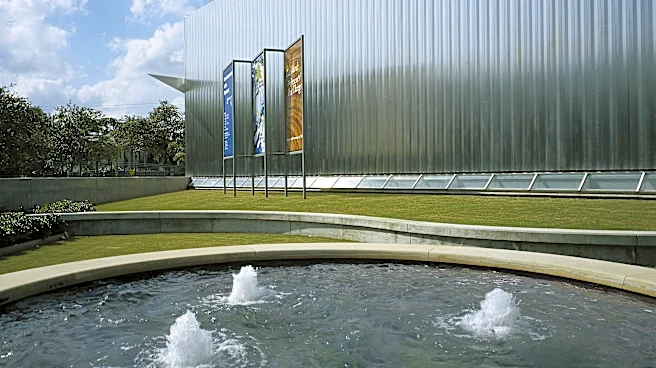
The Amon Carter Museum of American Art is presenting 'Creative Visions: Cynthia Brants and Ruth Carter Stevenson,' an exhibition that delves into the profound friendship between artist Cynthia Brants and Ruth Carter Stevenson, and its significant impact
on Fort Worth's cultural landscape. The exhibition features 22 works on paper, including pieces by Brants and other artists associated with the Fort Worth Circle. Brants and Stevenson, who met as children, maintained a lifelong bond. Brants introduced Stevenson to European modernism during their time at Sarah Lawrence College, which helped Stevenson develop her own artistic perspective, distinct from her father Amon G. Carter Sr.'s Western art collection. This exposure led Stevenson to engage deeply with Fort Worth's burgeoning modernist art community, ultimately contributing to the establishment of the Amon Carter Museum of American Art.
Why It's Important?
This exhibition is crucial for understanding the foundational influences behind a major American art institution and the broader development of modernist art in a regional context. It highlights how personal relationships and intellectual exchanges can profoundly shape cultural institutions and artistic movements. The narrative of Brants introducing Stevenson to European modernism underscores the role of mentorship and peer influence in artistic development and patronage. By showcasing works from the Fort Worth Circle, the exhibition also sheds light on a significant, though perhaps lesser-known, regional modernist movement. This not only enriches the historical understanding of American art but also emphasizes the importance of individual vision and collaborative spirit in establishing lasting cultural legacies, such as the Amon Carter Museum itself.
What's Next?
The 'Creative Visions' exhibition will continue to be on display at the Amon Carter Museum of American Art, offering visitors an opportunity to explore the intricate connections between art, friendship, and institutional development. The museum may host related educational programs, lectures, or guided tours to further contextualize the works and the historical period they represent. This exhibition could also inspire future research into the Fort Worth Circle and other regional modernist movements, potentially leading to new scholarly publications or further exhibitions. The museum's ongoing commitment to showcasing its collection and the stories behind its formation reinforces its role as a vital cultural and educational resource for the community and beyond.
Beyond the Headlines
Beyond the artistic and historical significance, the exhibition subtly explores themes of female friendship and its power in shaping cultural narratives. The relationship between Brants and Stevenson demonstrates how women, through their intellectual and emotional bonds, can drive significant cultural change and establish enduring institutions. This narrative challenges traditional art historical perspectives that often prioritize male figures or broader societal movements, instead highlighting the intimate, personal dynamics that can be equally transformative. The exhibition also implicitly discusses the evolution of taste and patronage, showing how exposure to new ideas can shift aesthetic preferences and lead to the creation of institutions that reflect a more diverse artistic vision, moving beyond established collections to embrace modernism.