





What's Happening?
Influencer marketing and social media trends are significantly altering personal style and consumer behavior, leading to a phenomenon where fashion choices are increasingly uniform and driven by curated online content. Terms like 'cottagecore,' 'clean
girl,' and 'coquette' define transient internet styles, often reduced to shopping lists rather than genuine lifestyle expressions. This shift is propelled by creators who post items, often through paid partnerships, earning commissions from follower purchases. Fast fashion exacerbates this by quickly replicating viral items, leading to short-lived trends. Algorithms further amplify this effect by prioritizing popular content, creating a feedback loop where what is already trending is shown to more people, encouraging widespread adoption. This dynamic suggests a move away from individual expression towards a more homogenized aesthetic dictated by online platforms.
Why It's Important?
This transformation in personal style and consumer behavior has significant implications for the U.S. retail industry, marketing strategies, and individual identity. For businesses, it means a heightened reliance on influencer collaborations and social commerce, requiring agile production cycles to capitalize on fleeting trends. Brands must navigate the challenge of maintaining authenticity while participating in a system that often prioritizes sales over unique expression. Economically, the rapid turnover of 'cores' fuels fast fashion, contributing to increased consumption and potential environmental concerns. Socially, the phenomenon raises questions about individuality and self-perception, particularly among younger generations. The pressure to conform to online aesthetics, where 'not having a label can start to feel like not having a self,' can impact mental well-being and foster a culture of constant consumption driven by external validation rather than personal preference. This shift also highlights the power of algorithms in shaping cultural norms and commercial success.
What's Next?
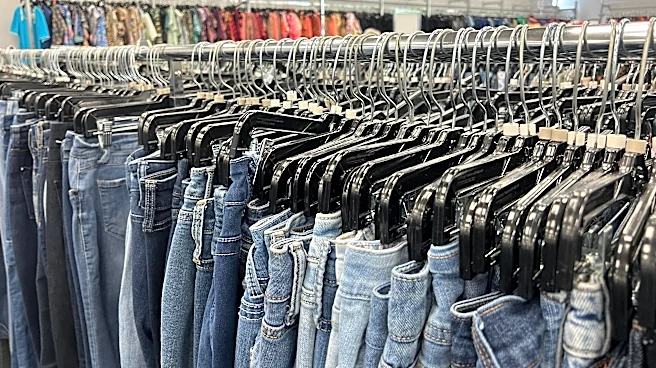
The future of personal style and consumer behavior will likely see a continued tension between algorithmic influence and a growing desire for authenticity. While social media will remain a dominant force in trend dissemination, there are emerging counter-movements. Young people are increasingly engaging in thrifting, altering, and remaking clothes, with secondhand shopping becoming mainstream, indicating a pushback against fast fashion's uniformity. Queer and Black creators are also adapting existing 'cores' to create more inclusive spaces, suggesting that while trends may be widespread, they can also be reinterpreted and diversified. However, the underlying mechanisms of influencer marketing and algorithmic amplification will persist, meaning brands and individuals will need to navigate this complex landscape. The challenge for consumers will be to cultivate genuine personal style amidst constant digital recommendations, while for businesses, it will be to balance trend-driven sales with sustainable practices and authentic brand messaging.
Beyond the Headlines
Beyond the immediate impact on fashion and retail, the phenomenon of 'cores' and influencer-driven style reflects a deeper societal shift in how identity is constructed and expressed in the digital age. The ease with which individuals can adopt a new 'core' and its associated shopping list suggests a commodification of identity, where self-expression is increasingly mediated by consumer choices presented online. This raises ethical questions about the authenticity of online personas and the psychological effects of living in a constantly curated and recommended world. The blurring lines between personal preference and algorithmic suggestion could lead to a generation that struggles to define its own aesthetic outside of digital trends. Furthermore, the economic model of influencer marketing, where individuals profit from promoting products, highlights the commercialization of social interactions and the potential for a 'gig economy' of personal branding. This could have long-term implications for how value is perceived, both in terms of goods and individual contributions to culture.