


What's Happening?
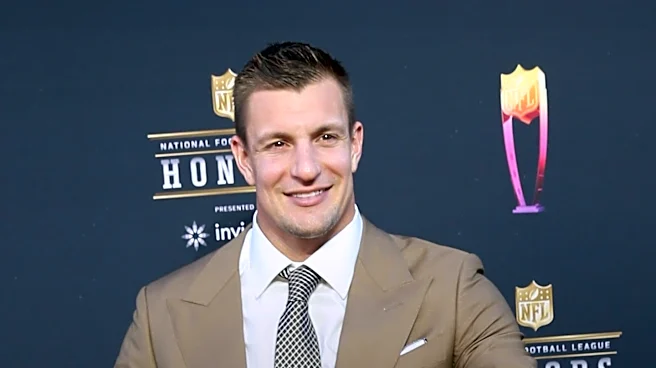
Former New England Patriots tight end Rob Gronkowski has publicly called for the NFL to implement punishments for officials, citing a season marked by questionable officiating decisions. He specifically highlighted pass interference and roughing-the-passer
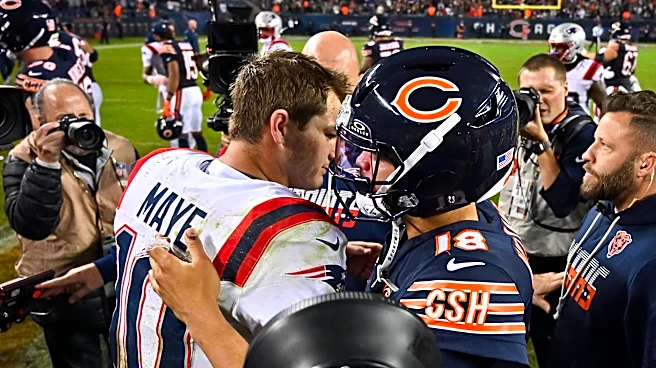
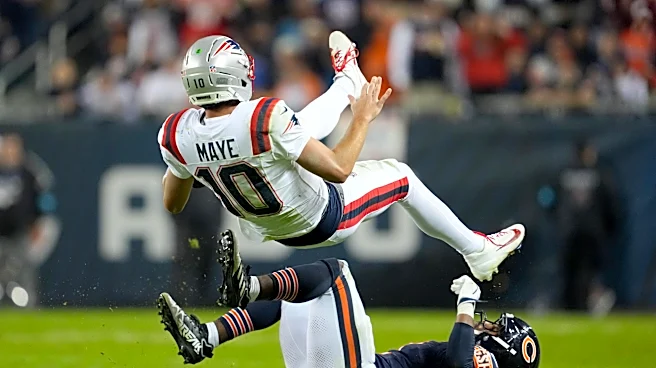
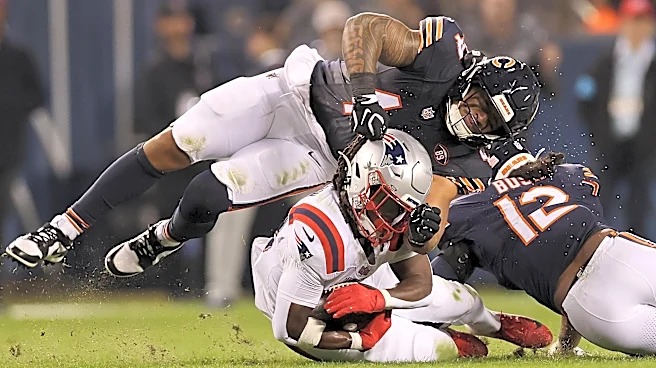
calls as areas needing improvement before the postseason, warning that incorrect flags could determine game outcomes. Gronkowski believes officials should face accountability similar to players and coaches, who can be cut or punished. His comments echo criticisms from Tom Brady regarding officiating. Additionally, Gronkowski expressed skepticism about the New England Patriots' chances of reaching the Super Bowl this year, suggesting their appearance last season was partly due to an easier schedule. He noted the team's current 4-3 record after a loss to the Chicago Bears and pointed to offensive injuries and a lack of playmakers as contributing factors to their struggles.
Why It's Important?
Rob Gronkowski's call for official accountability in the NFL is significant because it comes from a highly respected former player, adding weight to ongoing debates about officiating consistency and fairness. Inconsistent calls can directly impact game results, affecting team standings, playoff berths, and even the integrity of the sport. The financial implications are substantial, as incorrect calls can influence betting markets, team revenues, and player contracts. His critique of the Patriots' Super Bowl prospects, attributing last year's success partly to an 'easy schedule,' challenges the narrative around the team's performance and highlights the competitive nature of the league. This perspective from a former insider can influence fan perception and put pressure on the league to address officiating concerns and on the Patriots to prove their capabilities against tougher competition.
What's Next?
Gronkowski's comments may intensify the scrutiny on NFL officiating, potentially prompting the league to review its current evaluation and accountability processes for officials. While the NFL already grades officials on every play to determine postseason assignments, calls for more direct punishment could lead to further discussions or policy adjustments. For the New England Patriots, Gronkowski's assessment serves as a challenge. They will need to overcome injuries and demonstrate consistent performance against a tougher schedule to prove their Super Bowl contention. The team's upcoming games will be crucial in shaping their playoff hopes and addressing the concerns raised by their former star player.
Beyond the Headlines
The debate over NFL officiating extends beyond individual game calls to broader questions of fairness, transparency, and the human element in sports. Gronkowski's comparison of official accountability to that of players and coaches raises ethical considerations about professional standards across all roles within the league. His remarks also touch upon the psychological aspect of competition, where players and fans alike seek a level playing field. Furthermore, the discussion about the Patriots' schedule and their current performance highlights the cyclical nature of success in professional sports and the constant need for adaptation and talent acquisition. This ongoing dialogue contributes to the rich tapestry of narratives that define the NFL, engaging fans and shaping the league's public image.