








What's Happening?
Amazon's CEO has outlined the company's strategy for transforming the customer experience at Whole Foods Market. The focus is on enhancing convenience, offering greater value, and expanding store formats. This includes increasing the availability of pre-packaged,
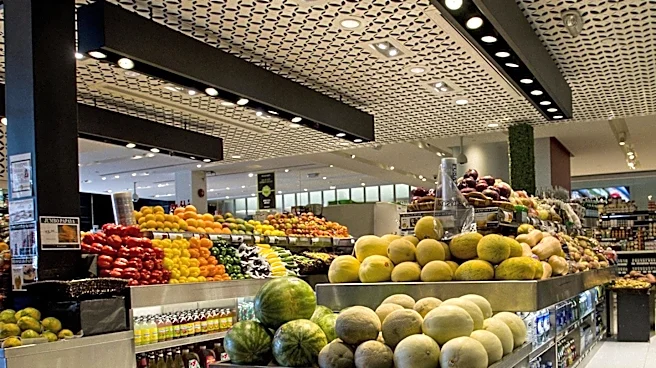
ready-to-eat items, such as cut fruit and marinated seafood, and prepared family meals to save customers time. Whole Foods is also expanding its smaller 'Daily Shop' format, with 12 locations currently open (6 in the US, primarily Manhattan), which condense the best of Whole Foods into a 9,000 to 12,000 square foot space. This smaller footprint allows for quicker expansion into dense urban areas and potentially college campuses, where larger stores are not feasible. The company is also emphasizing its 365 private label brand to offer competitive pricing on like-for-like products, asserting that its quality standards remain higher than many competitors despite comparable prices. Additionally, technological integrations like the Amazon Dash Cart, a smart shopping cart that allows customers to shop, check out, and bag groceries simultaneously, are being rolled out to enhance the in-store experience.
Why It's Important?
This strategic shift by Amazon for Whole Foods has significant implications for the U.S. grocery market and consumer behavior. By prioritizing convenience and value, Whole Foods is directly addressing evolving customer demands, particularly the trend of more frequent, smaller shopping trips and the desire for time-saving meal solutions. The expansion of the 'Daily Shop' format could increase Whole Foods' market penetration in urban and high-density areas, challenging traditional grocery models that rely on large-format stores. The emphasis on competitive pricing through the 365 brand aims to shed the 'Whole Paycheck' moniker, potentially attracting a broader customer base and intensifying price competition within the organic and natural food sectors. The integration of Amazon's technology, such as the Dash Cart and Alexa for shopping, signifies a broader trend of tech-driven innovation in retail, aiming to streamline the shopping process and gather valuable customer data. This could set new industry standards for efficiency and personalized experiences, forcing other grocery retailers to adapt or risk losing market share.
What's Next?
Whole Foods plans to continue expanding its 'Daily Shop' format, with the CEO envisioning hundreds of these smaller stores across the country, including potential locations on college campuses. The rollout of the updated Amazon Dash Cart to dozens of Whole Foods Market stores this year, with further expansion planned, indicates a continued push for technological integration to enhance the in-store shopping experience. The company will also persist in its efforts to offer more value through promotions and its 365 brand, aiming to further close price gaps with traditional grocers. Expect continued innovation in prepared foods and ready-to-eat options, driven by customer demand and data analytics. The ongoing integration with Amazon's broader grocery offerings, including same-day delivery, suggests a future where Whole Foods products are even more seamlessly accessible through Amazon's ecosystem, potentially blurring the lines between the two brands for consumers.
Beyond the Headlines
The transformation of Whole Foods under Amazon highlights a deeper shift in consumer expectations and the retail landscape. The focus on convenience and prepared foods reflects a societal trend towards busier lifestyles and a reduced emphasis on home cooking from scratch. This could lead to a greater reliance on pre-made meals and a potential decline in traditional grocery shopping habits. The strategic use of technology, such as the Dash Cart and AI shopping assistants, raises questions about the future of human interaction in retail and the increasing role of data in shaping consumer choices and store operations. Furthermore, by actively combating the 'Whole Paycheck' perception, Amazon is attempting to democratize access to organic and high-quality foods, which could have long-term implications for food accessibility and health trends across different socioeconomic groups. The expansion into smaller formats also signifies a re-evaluation of retail real estate, favoring agility and proximity over sheer size, a trend that could reshape urban planning and local economies.