







What's Happening?
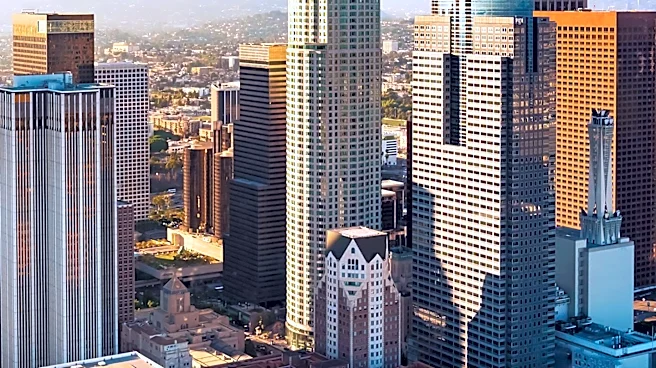
Stile Downtown Los Angeles has completed a multimillion-dollar renovation of the historic 1920s tower that once housed the Ace Hotel. The transformation includes a 24/7 membership-based creative lab, state-of-the-art music studios, co-working lounges,
and a redesigned rooftop bar. The project, led by South Korea-based AJU Continuum, aims to create a 'creative hub' rather than just a hotel, connecting Los Angeles to Seoul. The renovation also features a curated retail shop and restored theater, maintaining the building's historic-cultural monument designation.
Why It's Important?
The renovation of the former Ace Hotel into a creative hub represents a significant investment in downtown Los Angeles, a neighborhood that has faced challenges such as dwindling foot traffic and increased vacancies. By creating a space that caters to creatives and offers modern amenities, Stile DTLA aims to rejuvenate the area and support local businesses. This project could serve as a model for revitalizing urban spaces, demonstrating how historic buildings can be repurposed to meet contemporary needs while preserving their cultural significance.
What's Next?
As Stile DTLA opens its doors, the impact on the local community and economy will be closely watched. The success of this creative hub could encourage similar projects in other urban areas, potentially leading to a broader trend of repurposing historic buildings. Additionally, the collaboration between AJU Continuum and local design firms may inspire further international partnerships, fostering cultural exchange and innovation. The project's focus on supporting creatives and local businesses could also lead to increased economic activity and job creation in the area.
Beyond the Headlines
The transformation of the former Ace Hotel into a creative hub highlights the potential for historic buildings to serve as catalysts for urban renewal. By preserving the building's architectural heritage while introducing modern amenities, Stile DTLA demonstrates how cities can balance development with cultural preservation. This approach may influence future urban planning and development strategies, encouraging cities to leverage their historic assets to attract investment and foster community engagement.