






What's Happening?
Micron Technology (MU) stock experienced a significant decline of nearly 30% between October 29 and November 5, closing at $656.39. This sharp drop was primarily driven by investor concerns regarding future memory demand and spending in the artificial
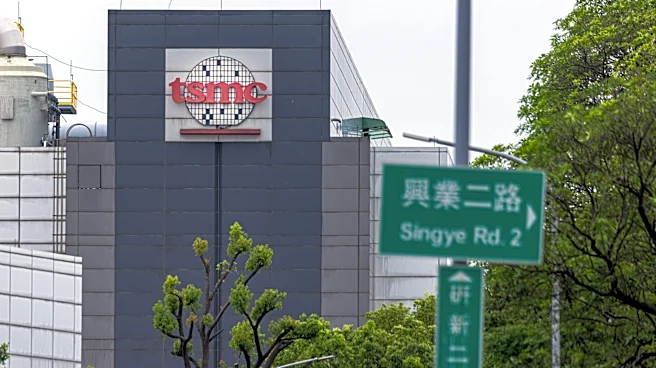
intelligence sector. The market's apprehension was further fueled by a cautious profit outlook from Japanese memory producer Kioxia, which suggested a potential moderation in the memory industry's rapid profitability improvement. Additionally, fears of restrictions on data center construction impacted AI infrastructure stocks, leading to a reassessment of future spending. Qualcomm reported a 26% year-over-year decrease in its fiscal fourth-quarter handset chip revenue, and Apple warned that higher memory costs were affecting its profitability. Despite these market pressures, Bernstein analyst Mark Li reiterated a 'Buy' rating for Micron on November 4, setting a price target of $1,300, which implies a potential upside of approximately 98% from the stock's November 5 closing price. Micron also reportedly suspended work on a planned $4.5 billion semiconductor facility in Taiwan due to a labor dispute, though this is seen as a longer-term capacity concern rather than an immediate earnings disruption.
Why It's Important?
The recent volatility in Micron Technology's stock highlights broader concerns within the semiconductor industry, particularly regarding the sustainability of high memory demand and pricing. The warnings from major players like Apple and Qualcomm about rising memory costs and their impact on profitability signal potential headwinds for the technology sector. If memory costs continue to increase, it could weaken smartphone demand, affecting manufacturers and consumers alike. Conversely, elevated memory prices have significantly boosted Micron's margins, as evidenced by its Mobile and Client Business Unit's 88% operating margin in fiscal Q4 2026, a substantial increase from 29% a year prior. The market's skepticism, reflected in Micron trading at approximately 4.7 times next-12-month earnings, indicates a lack of confidence in the long-term sustainability of its current profitability levels. The analyst's optimistic price target suggests a belief in Micron's underlying value and future earnings potential, provided memory demand remains robust and pricing favorable.
What's Next?
The immediate future for Micron Technology will likely involve close monitoring of memory demand trends and pricing stability. Investor sentiment will be heavily influenced by upcoming earnings reports from key players in the technology sector, particularly those in smartphone manufacturing and AI infrastructure. Any further indications of weakening demand or increased costs could lead to continued stock volatility. Conversely, strong performance or positive outlooks from major customers could help stabilize Micron's stock. The reported suspension of the Taiwan facility project, while not an immediate earnings concern, will be watched for updates as it could impact Micron's long-term production capacity and market share. Analysts will also be scrutinizing Micron's ability to maintain its high operating margins in the face of potential market shifts. The company's stock performance will depend on whether it can meet the substantial earnings growth projected by TIKR estimates, which forecast normalized EPS to increase significantly in fiscal 2027 and 2028.
Beyond the Headlines
The fluctuations in Micron's stock price and the broader semiconductor market underscore the cyclical nature of the industry and its sensitivity to global economic conditions and technological advancements. The interplay between rising memory costs and smartphone demand illustrates a critical economic dynamic: while higher component costs can boost supplier profits, they can also dampen demand for end products, creating a delicate balance. The concerns around AI spending and data center construction highlight the evolving landscape of technological investment and the potential for rapid shifts in market priorities. Furthermore, the labor dispute leading to the suspension of the Taiwan facility project points to geopolitical and operational risks that can impact global supply chains and long-term strategic planning for multinational corporations. This situation also brings to light the ongoing debate about whether current valuations in the tech sector accurately reflect future growth potential or if they are inflated by short-term trends.