





What's Happening?
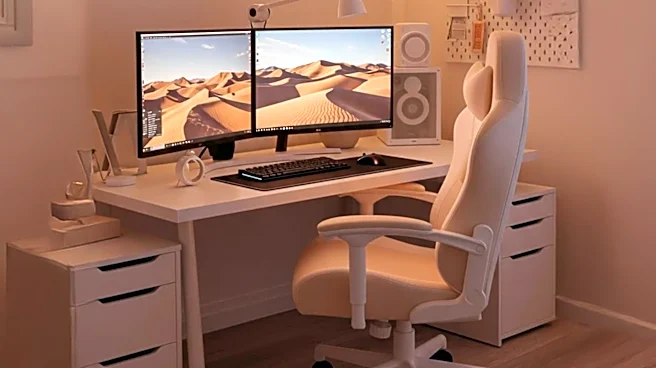
Current recommendations for home office setups highlight the importance of ergonomic furniture, proper lighting, and effective cable management to enhance productivity and well-being. Key considerations include a desk with at least 120 cm width and 60
cm depth, and an ergonomic office chair with adjustable lumbar support and armrests. Lighting is crucial, with desk lamps recommended to provide at least 500 lux of brightness and adjustable color temperature (from 3000K to 6000K) to adapt to different times of day and tasks. Integrated cable trays, hooks, or grommets are essential for maintaining an organized workspace and preventing clutter. Monitor arms are also suggested to free up desk space and ensure proper viewing angles, especially for standing desks. These guidelines aim to prevent discomfort, technical issues, and long-term postural damage often associated with poorly designed home workspaces.
Why It's Important?
The emphasis on ergonomic and well-organized home office setups is critical for the growing number of U.S. professionals working remotely. Poor workspace design can lead to significant health issues, including eye strain, musculoskeletal problems, and reduced concentration, ultimately impacting employee productivity and overall well-being. For businesses, investing in or advising on proper home office setups can lead to a healthier, more efficient workforce, potentially reducing healthcare costs and increasing output. For individuals, a well-designed home office can transform a daily chore into a comfortable and productive experience, fostering a better work-life balance. The market for ergonomic furniture, advanced lighting solutions, and cable management accessories stands to benefit significantly from this trend, as consumers seek to optimize their remote work environments. This shift also underscores a broader societal recognition of the importance of workplace health, even within the home.
What's Next?
As remote and hybrid work models continue to evolve in the U.S., the demand for sophisticated home office solutions is expected to grow. Manufacturers will likely continue to innovate in ergonomic furniture, smart lighting, and integrated cable management systems, offering more customizable and aesthetically pleasing options. Retailers will need to adapt their offerings to meet these specific needs, potentially creating specialized sections or services for home office design. Furthermore, employers might increasingly offer stipends or guidance for home office improvements, recognizing the direct link between employee well-being and productivity. Educational resources on ergonomic best practices for home offices will also become more prevalent, empowering individuals to create healthier and more efficient workspaces. The integration of technology, such as smart lighting and automated desk adjustments, will also likely become more commonplace.
Beyond the Headlines
The focus on optimal home office setups reflects a deeper cultural shift in how work is perceived and integrated into daily life. Beyond mere productivity, it highlights a growing awareness of the psychological and physical impact of one's immediate environment. The rise of 'dopamine decor' and personalized workspaces suggests that individuals are seeking not just functionality but also emotional well-being and inspiration from their work surroundings. This trend could lead to a re-evaluation of traditional office spaces, pushing companies to create more human-centric and adaptable environments. It also raises ethical considerations regarding employer responsibility for remote employees' home office conditions and the potential for digital divides if access to ergonomic equipment and high-quality setups is unequal. Ultimately, the home office is becoming a critical extension of personal identity and professional efficacy, blurring the lines between personal and professional spheres.