




What's Happening?
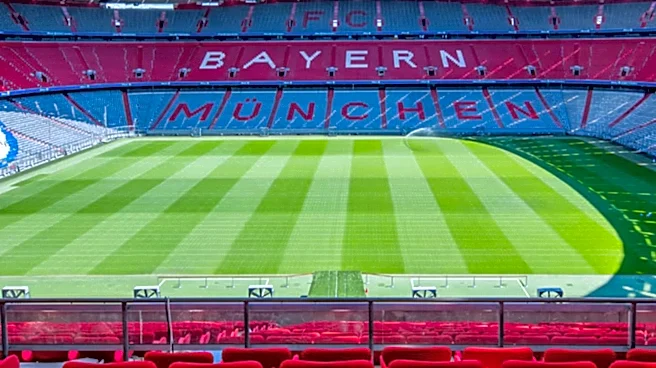
Bayern Munich is proceeding with an expansion of its training grounds at the Säbener Straße, which currently involves construction vehicles and closed-off pitch areas. This expansion is occurring while the club has put on hold the construction of a new,
five-story performance center, estimated to cost up to €150 million. Although plans for the performance center were approved by the Supervisory Board in 2024, the club has opted to prioritize investing funds into the squad for the time being. The long-term fate of the proposed performance center remains uncertain. The current work at Säbener Straße includes expanding the first-team section towards the training pitches, necessitating the removal of a sun terrace to create more space for various departments.
Why It's Important?
This decision by Bayern Munich highlights a strategic shift in resource allocation, prioritizing immediate squad strengthening over long-term infrastructure development. For the club, this could mean a more competitive team in the short to medium term, potentially impacting their performance in domestic and international competitions. The delay in the performance center, a significant investment, suggests a cautious financial approach or a re-evaluation of immediate needs. It also indicates a focus on optimizing existing facilities to support current team operations, rather than building entirely new ones. This could influence how other major sports organizations balance infrastructure projects with direct team investments, especially in a competitive landscape where squad quality is paramount.
What's Next?
The immediate future will see the continued expansion and optimization of the Säbener Straße training grounds. The club will likely monitor its financial situation and squad needs before revisiting the €150 million performance center project. Decisions regarding the performance center's construction will depend on future financial performance, transfer market opportunities, and the club's strategic priorities. Stakeholders, including fans and investors, will be watching to see if the current investment strategy yields improved on-field results and if the delayed performance center eventually moves forward. The club's leadership will need to communicate its long-term vision for both infrastructure and squad development.
Beyond the Headlines
The decision to delay a major infrastructure project in favor of squad investment reflects a broader trend in professional sports where immediate competitive success often takes precedence. While state-of-the-art facilities are crucial for player development and attracting talent, the direct impact of a strong squad on match outcomes and revenue generation can be more immediate. This situation also raises questions about the long-term planning and financial stability of major sports clubs, especially when large-scale projects are approved but then postponed. It underscores the dynamic nature of sports management, where priorities can shift based on performance, market conditions, and strategic objectives, potentially influencing player morale and the club's overall brand image.