









What's Happening?
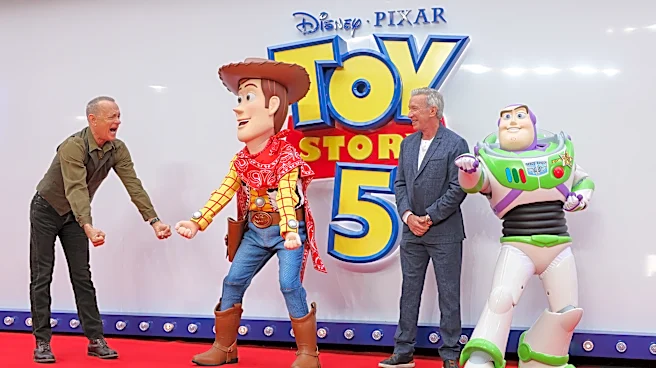
Disney and Pixar's 'Toy Story 5' has achieved a record-breaking box office debut, grossing an estimated $160 million domestically and $152 million internationally, totaling $312 million globally. Directed by Andrew Stanton and Kenna Harris, the film has surpassed
the opening weekend earnings of its predecessor, 'Toy Story 4,' which earned $120 million in 2019. The movie features the return of beloved characters voiced by Tom Hanks, Tim Allen, and Joan Cusack, among others. In this installment, the toys face a new challenge in the form of a tablet device named Lilypad, voiced by Greta Lee, which disrupts their playtime with their owner, Bonnie.
Why It's Important?
The success of 'Toy Story 5' underscores the enduring popularity of the franchise, which has been a significant revenue generator for Disney and Pixar since its inception in 1995. The film's impressive box office performance highlights the continued demand for animated features and the franchise's ability to attract audiences across generations. Additionally, the film's focus on technology and its impact on children's playtime resonates with contemporary societal concerns about screen time and its effects on child development. This theme is particularly relevant as devices like tablets become more prevalent in children's lives, prompting discussions among parents and educators about balancing technology use.
What's Next?
As 'Toy Story 5' continues to perform well at the box office, Disney and Pixar may explore further expansions of the franchise, potentially through sequels or spin-offs. The film's success could also influence future animated projects to incorporate modern themes that reflect current societal issues, such as technology's role in daily life. Additionally, the film's reception may encourage other studios to revisit and revive popular franchises, leveraging nostalgia and contemporary themes to attract audiences.
Beyond the Headlines
The film's exploration of technology's impact on playtime offers a cultural commentary on the evolving nature of childhood in the digital age. It raises questions about the balance between traditional play and digital interaction, a topic of increasing importance as children are introduced to technology at younger ages. The narrative may prompt discussions about the role of technology in education and entertainment, as well as its potential effects on creativity and social development.