






What's Happening?
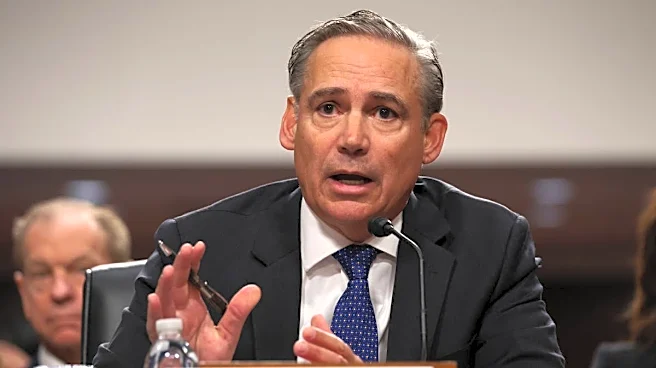
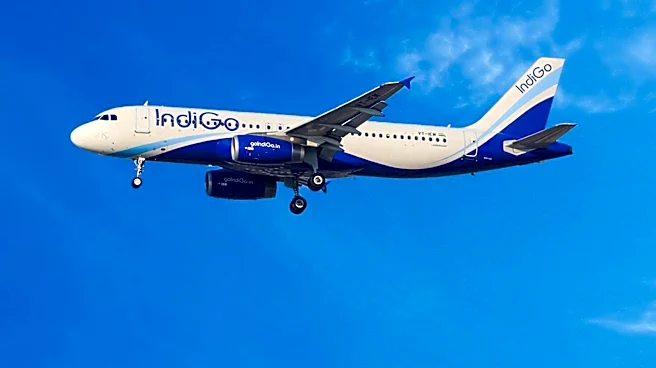
IndiGo, an Indian low-cost carrier, has reaffirmed its existing aircraft commitments despite anticipating a slowdown in capacity growth for the financial year ending March 2027. Willie Walsh, CEO of IndiGo, stated that the airline will adjust capacity and
aircraft utilization to manage immediate cost pressures. The carrier expects capacity growth to be in the low single digits for the fiscal year ending March 2027, partly due to the termination of its Boeing 787 wet-lease operation with Norse Atlantic Airways from November 1. However, IndiGo maintains its mid-teens growth forecast for the 2028 financial year and plans to introduce Airbus A350s in 2028 remain unchanged. The airline reported a net loss of 18.79 billion rupees ($198 million) for the three months ending September 30, an improvement from a 25.82 billion rupee loss a year prior. Revenue from operations increased by 25.9% to 233.64 billion rupees, aided by higher yields as the airline reduced flying during the seasonally weaker fiscal second quarter. IndiGo ended September with a fleet of 442 aircraft, an increase from 432 at the end of June.
Why It's Important?
This strategic adjustment by IndiGo highlights the challenges faced by airlines in balancing fleet expansion with operational costs and market demand. While IndiGo is committed to its long-term growth plans, including the introduction of advanced aircraft like the Airbus A350, its near-term capacity adjustments reflect a cautious approach to managing profitability in a volatile economic environment. The decision to reduce international capacity, particularly with the termination of the Norse Atlantic Airways wet-lease, indicates a focus on optimizing routes and aircraft utilization to mitigate rising fuel expenses and other operational costs. For the broader aviation industry, IndiGo's strategy could signal a trend where carriers prioritize financial stability and efficiency over aggressive expansion in the short term. This could lead to more disciplined capacity deployment across the sector, potentially impacting ticket prices and route availability for consumers. The airline's ability to maintain its 2028 growth forecast suggests confidence in a future market rebound, but the immediate focus remains on cost management and operational flexibility.
What's Next?
IndiGo plans to continue making capacity decisions on a flight-by-flight basis, carefully weighing demand against the cost of operating each service. The airline expects capacity cuts to primarily affect international routes in the December quarter due to the end of the Norse operation. However, the withdrawal of the widebody aircraft will not impact IndiGo's longer-term plans, as the A321XLR will maintain service to Amsterdam to retain its slot. IndiGo anticipates passenger revenue per available seat kilometer (ASK) to increase by over 25% year-over-year in the December quarter, with forward bookings indicating broadly flat year-over-year load factors during the stronger festive travel period. The airline has approximately 67.27 million seats scheduled across its network for winter 2026-27, representing a 2.9% increase from the previous winter. The introduction of Airbus A350s is still planned for 2028, suggesting a long-term vision for fleet modernization and expansion despite current adjustments.
Beyond the Headlines
IndiGo's strategy reflects a broader industry trend of adapting to fluctuating fuel prices and evolving passenger demand. The airline's emphasis on optimizing capacity and aircraft utilization underscores the importance of operational efficiency in maintaining profitability in the highly competitive aviation sector. The experience gained from the Norse Atlantic Airways operation, despite its termination, is expected to benefit IndiGo when it introduces the A350s, indicating a continuous learning and adaptation process within the airline. This approach highlights how carriers are leveraging short-term operational adjustments to inform and strengthen their long-term strategic goals. The correlation between fuel prices and ticket prices, as noted by CEO Willie Walsh, also points to the inherent sensitivity of airline economics to external factors, suggesting that consumers can expect continued price fluctuations tied to global energy markets. This dynamic interplay between operational decisions, market conditions, and long-term strategic planning will continue to shape the future of air travel.