
What's Happening?
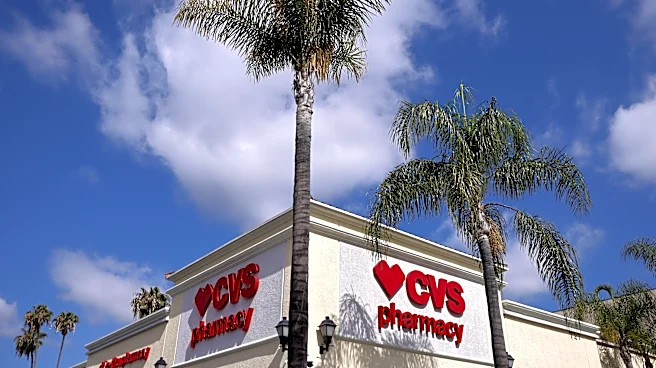
CVS Health has kept its quarterly dividend at $0.665 per share for 12 consecutive quarters, despite raising its 2026 guidance three times. The company now anticipates adjusted earnings per share (EPS)
of at least $8.20 and operating cash flow of at least $15.5 billion for 2026. This decision to prioritize other financial strategies, such as share buybacks and a planned company breakup, over dividend increases comes as CVS Health's Aetna segment shows significant recovery. Aetna's medical benefit ratio improved to 91.3% from 92.8% in the third quarter, leading to a rise in segment-adjusted operating income to $912 million, up from $314 million a year prior. This performance contributed to CVS Health beating consensus adjusted EPS estimates for the sixth consecutive quarter, reporting $2.09 against an expected $1.65.
Why It's Important?
The decision by CVS Health to maintain its dividend while increasing its financial outlook and having ample cash flow signals a strategic focus on long-term restructuring and capital allocation. For investors, this indicates that management believes share buybacks and the planned separation of its businesses will generate greater value than immediate dividend increases. The strong performance of Aetna, particularly the improvement in its medical benefit ratio, highlights the effectiveness of CVS Health's integrated healthcare model and its ability to manage costs within its insurance arm. This trend is also observed in competitors like UnitedHealth Group, suggesting broader industry improvements in managing healthcare costs. The company's financial health, as evidenced by its ability to cover its dividend approximately five times with free cash flow, provides a stable foundation for its strategic initiatives, but also raises questions for income-focused investors regarding future dividend growth.
What's Next?
CVS Health's immediate future will likely involve continued execution of its strategic plans, including further details on its planned separation into two independent, publicly traded companies. Investors will be closely watching for updates on the timeline and specifics of this breakup, as well as the impact of ongoing share buyback programs. The company's ability to sustain Aetna's improved medical benefit ratio will be crucial for continued earnings growth. Future GLP-1 coverage decisions and utilization metrics will also be key indicators of how CVS Health navigates the evolving landscape of pharmaceutical pricing and access. The market will also be looking for any shifts in dividend policy once the planned breakup is further along or if market conditions change significantly.
Beyond the Headlines
CVS Health's strategic choices reflect a broader trend in the healthcare industry where large integrated players are re-evaluating their structures to optimize value and respond to market dynamics. The emphasis on buybacks and a breakup over dividend hikes suggests a management team focused on unlocking shareholder value through corporate restructuring rather than direct income distribution. This approach could lead to a more streamlined and focused business model for both the healthcare services and retail pharmacy segments, potentially enhancing their individual competitive positions. However, it also places a greater burden on investors to understand the long-term implications of these structural changes. The ongoing scrutiny of healthcare costs, particularly for new therapies like GLP-1s, will continue to shape CVS Health's operational and financial strategies, influencing its role as a major healthcare solutions platform.