







What's Happening?
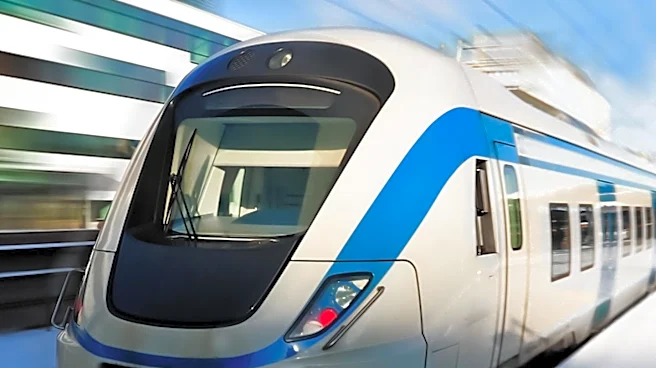
Recent data from the second quarter of 2026 indicates that battery-electric trains are outperforming hydrogen trains in terms of fleet-weighted deployment utilization. Battery-electric fleets averaged an 85.9% utilization rate, compared to 70.8% for hydrogen fleets.
This trend is attributed to the simpler integration of battery trains with existing railway electrical systems, allowing them to draw power from overhead wires and store it for use on unelectrified sections. In contrast, hydrogen trains require additional infrastructure for hydrogen production, storage, and refueling, which can complicate operations. The evidence suggests that battery trains are more reliable and easier to maintain, making them a more attractive option for regional passenger rail services.
Why It's Important?
The preference for battery-electric trains over hydrogen trains has significant implications for the future of rail transportation. Battery trains offer a more straightforward and cost-effective solution for electrifying rail networks, particularly in regions with existing electrical infrastructure. This could lead to increased investment in battery technology and infrastructure, further reducing the carbon footprint of rail transport. The findings also highlight the challenges facing hydrogen trains, which may struggle to compete without significant advancements in technology and infrastructure. As countries seek to decarbonize their transportation sectors, the success of battery trains could influence policy decisions and funding allocations.
What's Next?
The rail industry is likely to continue exploring both battery and hydrogen technologies, but the current data suggests a stronger focus on battery-electric solutions. Future developments may include advancements in battery capacity and efficiency, as well as improvements in charging infrastructure. Policymakers and industry leaders will need to consider the long-term viability and sustainability of each technology, balancing environmental goals with economic and operational considerations. The ongoing comparison between battery and hydrogen trains will shape the future of rail transport, potentially leading to new innovations and strategic partnerships.