


What's Happening?
International gold prices have experienced a significant decline, dropping by approximately 36.7% from a historical high of $5589 per troy ounce at the end of January this year to $3537 per troy ounce on November 20. This marks a new low since October
of last year. The sharp fall has prompted a surge in public interest, with many flocking to banks to purchase gold. According to bank operators, customer traffic has increased by about 10% this week, with most customers buying small amounts of gold for savings, typically ranging from 100,000 to 200,000 units of local currency. The largest transaction observed was for a 1-kilogram gold bar, currently priced at nearly 4 million units of local currency. The current price per unit of gold is 15,000 units, a decrease from 16,200 units last week, representing a 6% to 7% drop. Compared to last month's price of 17,000 units, the decline is approximately 11%.
Why It's Important?
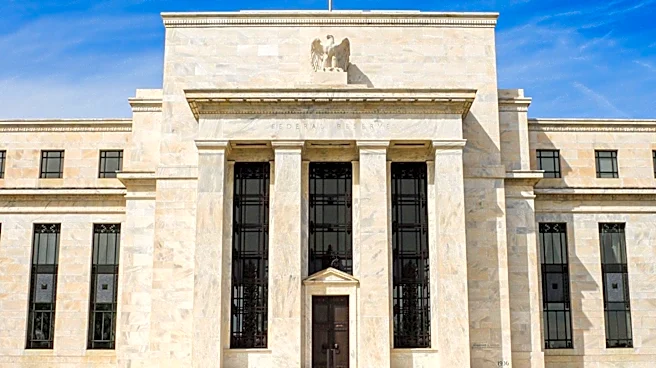
The substantial drop in international gold prices and the subsequent public rush to buy gold highlight several critical economic factors. The primary drivers behind this decline include the strengthening expectation of interest rate hikes by the U.S. Federal Reserve, which diminishes the investment appeal of non-yielding assets like gold. Additionally, a stronger U.S. dollar further reduces gold's attractiveness as an investment. The significant decline in AI technology stocks has also contributed to a sell-off in precious metals. This situation indicates a shift in investor sentiment, moving away from safe-haven assets like gold towards potentially higher-yielding investments as interest rates rise. For the average consumer, the lower prices present an opportunity to acquire gold as a tangible asset, potentially as a hedge against future economic uncertainties, despite expert predictions of further short-term declines. The increased demand from individual buyers could provide some support to the market, but the overarching macroeconomic factors, particularly U.S. monetary policy, remain dominant.
What's Next?
Analysts predict that gold prices may continue to decline in the short term, with further significant drops possible in the coming trading days. Experts suggest that gold prices might not rebound until 2027, contingent on several conditions: oil prices returning to normal levels, inflation easing, and interest rates stabilizing. If the U.S. dollar continues to strengthen and interest rates continue to rise, further depreciation in gold prices is expected. The current price is precariously holding above the $3500 per troy ounce mark. While the historically low prices are attracting public buyers, the long-term outlook remains cautious, with a sustained recovery not anticipated for several years. This suggests that investors and consumers considering gold purchases should be prepared for continued volatility and potential further price reductions before any significant upward trend emerges.
Beyond the Headlines
The current gold market dynamics reflect a complex interplay of global economic forces and investor psychology. The U.S. Federal Reserve's monetary policy, particularly interest rate decisions, exerts a profound influence on global asset prices, including gold. The strengthening U.S. dollar, often a consequence of rising interest rates, makes dollar-denominated assets more expensive for international buyers and reduces the relative value of gold. The mention of AI technology stock declines also points to a broader reallocation of capital within financial markets, where investors might be divesting from traditional safe havens to chase growth opportunities in other sectors, or simply liquidating assets across the board during periods of market uncertainty. This trend underscores the interconnectedness of various asset classes and the significant impact of U.S. economic policy on international markets and individual investment decisions.