








What's Happening?
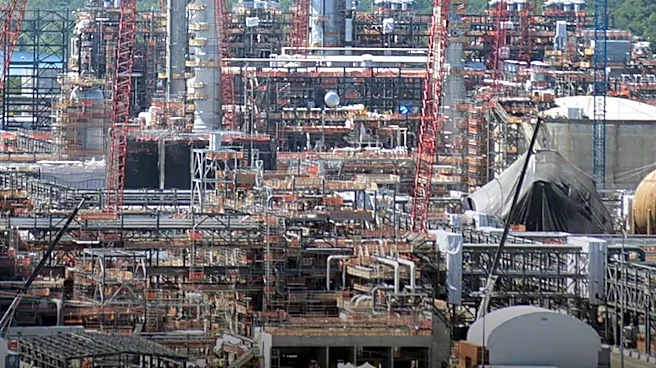
CITGO Petroleum Corporation is moving forward with a significant $310 million investment to expand its Lake Charles Refinery. This project, known as the Depentanizer Project, aims to enhance the refinery's capabilities by adding new facilities and equipment
specifically designed to improve naphtha upgrading. Naphtha, a liquid hydrocarbon mixture derived from crude oil, natural gas condensates, or coal tar, will be processed to convert lower-value streams into higher-value gasoline blend components. This strategic upgrade is intended to increase the refinery's flexibility and strengthen CITGO's capacity to meet the ongoing U.S. demand for reliable transportation fuels. The Lake Charles Refinery, which has been operational since 1944, is strategically located along the Calcasieu Ship Channel, allowing it to process diverse crude oils and distribute refined products to key markets.
Why It's Important?
This $310 million investment by CITGO is a substantial economic boost for Southwest Louisiana and holds broader implications for the U.S. energy market. For the local community, the project reinforces the long-term viability of the Lake Charles Refinery, a major employer in the region. It is expected to create significant contract work during the construction phase and support the refinery's existing workforce, providing economic stability and job opportunities. Furthermore, the expansion will extend opportunities for local suppliers and service providers, integrating them further into the region's energy economy. On a national level, by enhancing the refinery's ability to convert lower-value streams into higher-value gasoline components, CITGO will increase its capacity to meet U.S. fuel demand, contributing to energy security and market stability. This upgrade also signifies a commitment to refining domestic light crude, aligning with national energy independence goals and adapting to evolving market needs.
What's Next?
The Depentanizer Project at the CITGO Lake Charles Refinery is expected to become operational in 2029. Leading up to this, CITGO will continue to engage with employees, contractors, and local stakeholders as engineering, construction, and commissioning activities progress. The construction phase will likely involve a significant influx of contract workers, providing a temporary economic stimulus to the region. Once operational, the enhanced refinery capabilities will allow CITGO to increase its production of higher-value gasoline blend components, potentially impacting fuel supply and pricing in the U.S. market. The company will also focus on integrating the new facilities into its existing operations, ensuring a seamless transition and maximizing the efficiency of the upgraded plant. Continuous monitoring of market demand and regulatory compliance will be crucial as the project moves towards its completion and subsequent operation.
Beyond the Headlines
The CITGO investment in its Lake Charles Refinery represents more than just an operational upgrade; it signifies a strategic adaptation to the evolving energy landscape and a commitment to long-term industrial presence. By focusing on improving naphtha upgrading capabilities, CITGO is positioning itself to efficiently process a wider range of crude oils, including domestic light crude, which is crucial for national energy independence. This move also highlights the ongoing importance of traditional refining processes in meeting the U.S.'s transportation fuel needs, even as discussions around renewable energy intensify. The project's emphasis on increasing refinery flexibility suggests a forward-looking approach to market volatility and changing consumer demands. Furthermore, the substantial investment in an existing facility underscores the economic value of maintaining and modernizing established industrial infrastructure, rather than solely focusing on new developments. This commitment to a long-standing asset like the Lake Charles Refinery has profound implications for regional economic stability, workforce development, and the broader energy sector's resilience.