



What's Happening?
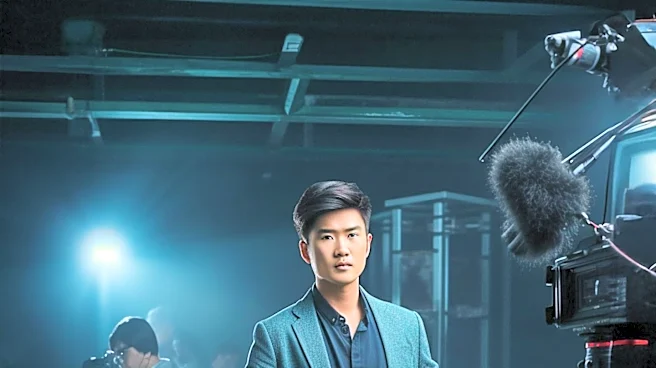
China's screen industry is experiencing a significant shift with the rise of AI-generated short dramas, particularly on platforms like Douyin (the Chinese version of TikTok). These AI-powered productions span various genres, including fantasy, romance,
and period tales, with actors, settings, and visual elements largely created by artificial intelligence. A notable example is 'The Inverse Zone,' a mystery-thriller that has garnered over a million likes per episode, produced by a small team of three individuals. This trend is opening new creative avenues for young filmmakers who previously faced high production costs and barriers in traditional filmmaking. The technology, utilizing domestic video-generation models like Seedance 2.0 and 2.5, allows for the creation of professional-quality content with significantly reduced financial and geographical constraints. While AI handles image generation, basic voice work, and material rendering, human input remains crucial for scriptwriting, character development, cinematography, and post-production, ensuring the 'soul' of the series is still human-controlled.
Why It's Important?
The proliferation of AI-generated short dramas in China has profound implications for the entertainment industry, particularly for actors and content creators. For young creators, AI acts as a democratizing force, enabling small teams to produce high-quality film and television content that was previously inaccessible due to cost and logistical hurdles. This shift could lead to a surge in diverse and innovative storytelling, as creative visions can be realized more easily. However, this technological advancement presents a double-edged sword for actors. Many who benefited from the previous boom in live-action short dramas are now finding fewer acting opportunities, with some being forced to seek alternative professions. The emergence of AI-generated characters gaining fanbases and brand endorsements further complicates the landscape, potentially diminishing the demand for human actors. Additionally, the use of celebrity likenesses in AI-generated content raises complex questions about control, intellectual property, and revenue sharing, which could disproportionately affect ordinary actors without clear regulatory frameworks.
What's Next?
The Chinese screen industry is likely to see continued integration of AI into content creation, leading to a new production model where humans and machines increasingly collaborate. This could involve AI handling more of the technical and visual aspects, while human creators focus on narrative, character depth, and overall artistic direction. The debate surrounding the ethical and economic implications of AI in entertainment, particularly regarding actor employment and the use of celebrity likenesses, is expected to intensify. Industry stakeholders, including policymakers, production companies, and artist guilds, will need to address these challenges to establish clearer guidelines and regulations. This may involve developing new compensation models for actors whose likenesses are used by AI, and exploring ways to retrain or re-skill actors for roles that complement AI-driven productions. The long-term trajectory suggests a transformation of traditional production pipelines, potentially leading to more efficient and cost-effective content creation, but also necessitating a re-evaluation of human roles within the industry.
Beyond the Headlines
The rise of AI-generated short dramas in China highlights broader societal and ethical questions about the future of creative industries in an increasingly automated world. Beyond the immediate impact on actors, this trend touches upon the very definition of artistry and human creativity. As AI becomes more sophisticated in generating compelling narratives and visuals, the distinction between human-made and AI-made art may blur, prompting philosophical discussions about authenticity and emotional resonance in storytelling. The economic implications extend beyond job displacement, raising concerns about the concentration of power in the hands of those who control AI technologies and platforms. Furthermore, the potential for AI to replicate and manipulate human likenesses without explicit consent or fair compensation could lead to significant legal and ethical battles over digital rights and personal identity. This technological shift could also influence cultural narratives, as AI-driven content might reflect or even shape societal values and preferences, necessitating a critical examination of the biases and perspectives embedded within AI algorithms.