






What's Happening?
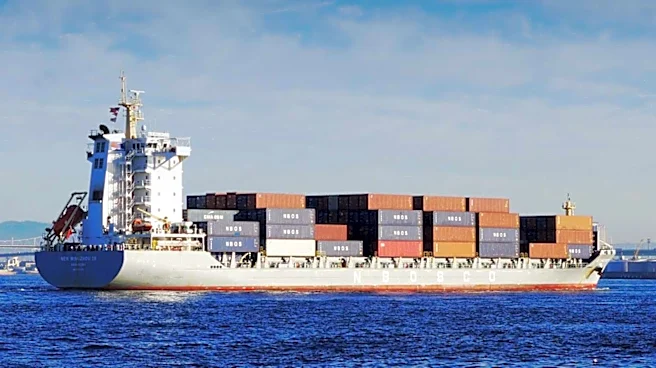
The maritime industry is making strides in standardizing digital emissions reporting through the Tripartite Joint Industry Working Group (JIWG), chaired by BIMCO. This group has released version 1.0 of the Operational Vessel Data (OVD) and Vessel Emissions
Reporting (VER) frameworks. These voluntary industry frameworks aim to establish a common foundation for more efficient and consistent data exchange, rather than creating new reporting obligations. The OVD provides a structured format for exchanging operational vessel and fuel-consumption data, defining common data elements, names, units, and structures. The VER complements this by offering standardized formats for emissions reporting, particularly for commercial practices like charter-party performance and Emission Trading Schemes (ETS) cost allocation. This initiative builds upon earlier work by BIMCO and IACS to integrate emissions-reporting data elements into the IMO Compendium on Facilitation and Electronic Business, addressing the challenge of disparate reporting systems and data formats across the sector.
Why It's Important?
The harmonization of digital emissions reporting is crucial for the U.S. and global maritime industry due to increasing regulatory demands, such as the IMO Data Collection System (IMO DCS) and the EU Monitoring, Reporting and Verification system (EU MRV). Inconsistent data formats and reporting systems lead to inefficiencies, repeated data entry, and potential inaccuracies, impacting compliance and operational costs for shipping companies, including those operating in or with the U.S. By adopting common frameworks like OVD and VER, the industry can achieve more consistent, efficient, and traceable data exchange between ships, shipping companies, software providers, and verification bodies. This standardization will reduce administrative burdens, improve data integrity, and facilitate better decision-making regarding environmental performance and sustainability initiatives, ultimately benefiting U.S. businesses involved in maritime trade by streamlining compliance and potentially fostering greener supply chains.
What's Next?
The JIWG will continue to gather feedback from practical implementation and industry consultations to identify priorities for further development of the OVD and VER frameworks. An update on this work is scheduled to be presented at the Tripartite meeting in Tokyo on October 28, 2026. A key next step involves assessing options for transitioning OVD and VER towards independent and broadly representative governance. The objective is to establish clear ownership, open participation, transparent decision-making, and predictable change management to ensure these frameworks remain neutral and accessible industry resources. This ongoing collaborative effort aims to refine the standards and ensure their widespread adoption, further enhancing interoperability and efficiency in maritime emissions reporting globally.
Beyond the Headlines
The drive for harmonized digital emissions reporting reflects a broader industry shift towards greater transparency and accountability in environmental performance. Beyond regulatory compliance, standardized data exchange facilitates the integration of sustainability metrics into commercial operations and financial decisions. This can influence investment in greener technologies, fuel choices, and operational practices across the maritime sector. For the U.S., this means that companies engaged in shipping will increasingly need to adapt to these global standards, potentially leading to technological upgrades in fleet management and data systems. The initiative also highlights the power of industry collaboration in addressing complex challenges, setting a precedent for how sectors can collectively develop solutions for environmental stewardship and operational efficiency, impacting global trade and environmental policy discussions.