






What's Happening?
A Community Benefits package for the $2.2 billion Renaissance Center redevelopment in Detroit has received preliminary approval from the Neighborhood Advisory Council (NAC). The NAC, a nine-member group of resident volunteers, voted 8 to 1 to recommend
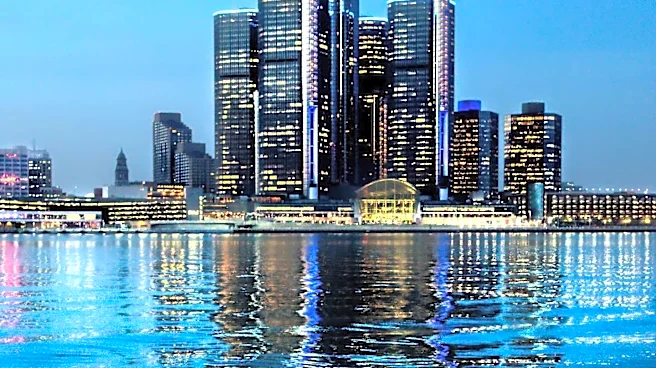
the $133.3 million package for final approval by the Detroit City Council next month. This package is the result of weeks of negotiations between the NAC, developers Bedrock and General Motors, and over 500 public comments. The total package includes $43.5 million in direct spending by the developers for the community and nearly $90 million in voluntary 'Payments in Lieu of Taxes' (PILOT) to the city. The redevelopment project, which will unfold in phases over a decade, involves a $1.6 billion overhaul of the five original Renaissance Center towers and a $624 million development of the 30-acre east riverfront into public space and attractions. Dan Gilbert is personally contributing $1 billion in equity, with GM adding $250 million.
Why It's Important?
This preliminary approval marks a significant step for one of Detroit's largest redevelopment projects, highlighting the growing influence of community benefits agreements in urban development. The substantial financial commitment to community benefits, totaling $133.3 million, sets a new precedent for such packages in the city's history. It demonstrates an effort to address concerns about gentrification and ensure that large-scale developments provide tangible advantages for existing residents. The inclusion of affordable housing commitments, small business support, and free parking for Detroit residents aims to mitigate potential negative impacts and foster inclusive growth. The project's reliance on $548 million in tax breaks and development incentives also underscores the complex interplay between private investment, public funding, and community demands in revitalizing urban centers.
What's Next?
The Community Benefits agreement is scheduled to go before the Detroit City Council’s Planning and Economic Development Committee on November 12. A final vote by the full City Council is expected shortly thereafter. If approved, the $2.2 billion Renaissance Center redevelopment will proceed in phases over the next decade. The project will involve demolishing two of the five original RenCen towers and transforming the remaining structures into a mix of housing, hotel rooms, and modernized office space. The 30-acre east riverfront will also be developed into public spaces and attractions. The developers, Bedrock and General Motors, will be responsible for implementing the various components of the community benefits package, including allocating funds for affordable housing, supporting small businesses, and developing a movie theater on the east riverfront.
Beyond the Headlines
The debate surrounding this Community Benefits package reveals deeper tensions inherent in large-scale urban redevelopment, particularly in cities like Detroit with a history of economic disparity and displacement. While proponents highlight the unprecedented scale of community investment, critics, like NAC member Teron Haynes Jr., raise concerns about the lack of direct public ownership or revenue-sharing, and the potential for gentrification. The project's reliance on significant tax incentives also sparks questions about the balance between attracting private investment and ensuring equitable development. This case exemplifies the ongoing challenge of balancing economic growth with social equity, and the role of community activism in shaping the terms of urban transformation. The outcome will likely influence future development agreements in Detroit and other U.S. cities facing similar revitalization efforts.