







What's Happening?
The market for warehouse management systems (WMS) is experiencing a significant surge in demand, driven by geopolitical instability and the increasing need for supply chain resilience. North America is currently leading this market due to its highly developed
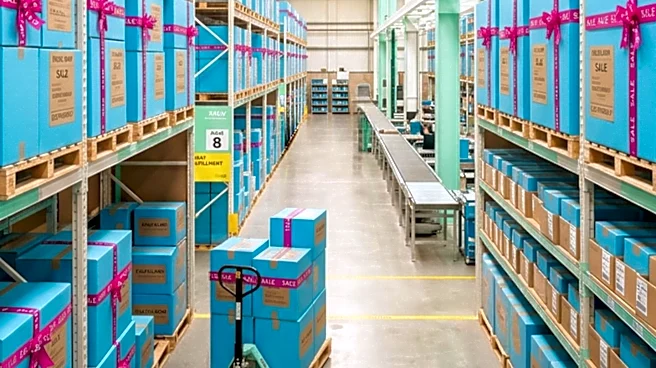
logistics sector and a strong emphasis on technological innovation and software integration. Geopolitical pressures, particularly from conflicts in the Middle East, have disrupted traditional trade routes, leading to volatile logistics costs and transportation timelines. This has prompted a strategic shift towards nearshoring and regional warehousing, requiring robust technological frameworks to manage more complex networks of localized distribution centers. The global WMS market is projected to grow from approximately $3.9 billion to over $11 billion by 2030, at a compound annual growth rate of 16%. Key growth drivers include the expansion of e-commerce, the integration of advanced robotics, and the demand for enhanced supply chain visibility.
Why It's Important?
The dominance of North America in the WMS market underscores the region's proactive approach to modernizing its logistics infrastructure and ensuring supply chain stability. This trend is crucial for U.S. businesses, as it directly impacts their ability to manage inventory efficiently, reduce operational costs, and mitigate risks associated with global disruptions. The shift towards nearshoring and regional warehousing, facilitated by advanced WMS, can enhance national economic security by reducing dependency on vulnerable long-distance supply chains. For U.S. industries, this means greater control over inventory, faster response times to market changes, and improved resilience against external shocks. Companies that invest in these systems stand to gain a competitive advantage through optimized operations and reduced exposure to geopolitical risks, while those that lag may face increased costs and operational inefficiencies.
What's Next?
The WMS market is expected to continue its rapid evolution, with future systems increasingly incorporating artificial intelligence and machine learning for predictive demand forecasting and automated slotting strategies. The implementation of digital twins will allow for virtual simulations to optimize warehouse layouts before physical deployment. The adoption of 5G connectivity will enable seamless interaction between thousands of connected devices and sensors within facilities, further enhancing efficiency. There will also be a growing focus on sustainable operations, with software modules designed to track carbon footprints and optimize energy consumption. The expansion into micro-fulfillment centers, particularly in urban areas, will drive the development of specialized, compact systems. These advancements will be critical for U.S. businesses to maintain competitiveness and adapt to evolving consumer demands and global supply chain complexities.
Beyond the Headlines
The accelerated demand for advanced WMS goes beyond mere operational efficiency; it reflects a fundamental re-evaluation of corporate and national economic security strategies. The emphasis on supply chain resilience, driven by geopolitical turbulence, highlights a broader recognition that robust logistics infrastructure is a critical component of national stability. This shift could lead to significant investments in domestic manufacturing and warehousing capabilities within the U.S., fostering job creation and technological innovation. Furthermore, the integration of AI and machine learning in WMS raises ethical considerations regarding data privacy and the future of human labor in logistics. The push for sustainable operations also aligns with broader environmental, social, and governance (ESG) goals, potentially influencing corporate responsibility standards across U.S. industries. This evolution signifies a long-term transformation in how goods are stored, managed, and distributed, with profound implications for the U.S. economy and workforce.