






What's Happening?
The U.S. Treasury Department announced an expansion of its buyback program for longer-dated Treasuries, doubling the maximum purchase size from $2 billion to at least $4 billion per operation, effective September 9. This move, intended to improve liquidity
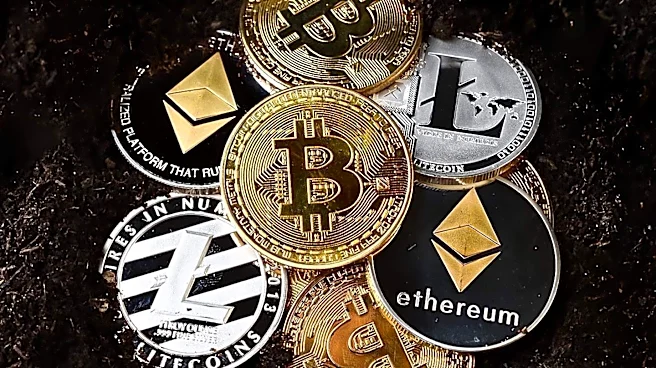
and reduce turbulence in the bond market, has been interpreted by investors as a signal that policymakers are increasingly willing to tolerate inflation or currency weakness to maintain economic stability. Following this announcement, Bitcoin surged by approximately 6% to over $68,000, and Ethereum also saw significant gains. Gold and silver prices also rose, while long-term Treasury yields fell, the dollar weakened, and stock markets remained relatively stable. This market reaction indicates a return of the 'debasement trade,' where investors flock to hard assets when they anticipate policies that could lead to inflation or currency devaluation.
Why It's Important?
This development is significant because it suggests a potential shift in U.S. economic policy, prioritizing market stability and economic growth over strict inflation control. High Treasury yields have been increasing borrowing costs across the economy, affecting businesses, homebuyers, and major investment projects. By intervening in the bond market, the Treasury is signaling its readiness to alleviate stress, which could prevent borrowing costs from spiraling higher and stifling investment, particularly in strategically important sectors like artificial intelligence. The 'debasement trade' gaining traction implies that investors are increasingly hedging against future inflation or currency weakening, which could lead to sustained demand for cryptocurrencies and precious metals as alternative stores of value. This could also influence the Federal Reserve's future monetary policy decisions, potentially leading to larger liquidity injections or even quantitative easing if bond market stress persists.
What's Next?
Over the coming months, market participants will closely monitor further actions from the Treasury, the Federal Reserve, and international partners like Japan to gauge the durability of this policy direction. The Treasury's buyback program is not quantitative easing, as it involves buying back existing bonds rather than creating new money. However, if bond market stress intensifies, traders anticipate a higher likelihood of more significant interventions, potentially including actual quantitative easing. The U.S. government's focus on AI leadership, which requires substantial capital investment, provides a strong incentive to prevent borrowing costs from rising excessively. Additionally, the situation with Japan, the largest foreign holder of U.S. Treasuries, and the stability of the yen will be crucial. Any forced selling of Treasuries by Japan to stabilize its currency could exacerbate U.S. borrowing cost issues, prompting coordinated efforts between the two governments to prevent such an outcome. These factors suggest a continued environment where policymakers might lean towards measures that could lead to increased liquidity in the system.
Beyond the Headlines
The resurgence of the 'debasement trade' highlights a deeper tension within the U.S. economy: the challenge of managing enormous debt loads and sticky inflation while simultaneously fostering economic growth and strategic investments. The government's intervention in the bond market, even if not full quantitative easing, reflects a pragmatic approach to economic management where the risks of high borrowing costs are deemed more immediate than the risks of moderate inflation or currency weakness. This could lead to a long-term shift in investor behavior, with a greater emphasis on assets that are perceived as inflation-resistant or supply-constrained. The interplay between domestic economic policy, global financial stability (particularly concerning Japan's role as a major Treasury holder), and the strategic imperative of AI development creates a complex landscape where traditional economic models may be re-evaluated. The ethical implications of potentially devaluing currency to stimulate growth, and its impact on different segments of the population, could also become a more prominent discussion.