

What's Happening?
Oscar-winning director Michel Hazanavicius is set to present exclusive footage from his upcoming film, 'The Third Hand,' at the Les Arcs Film Festival in December. This presentation will be part of an AI case study, where Hazanavicius and post-production
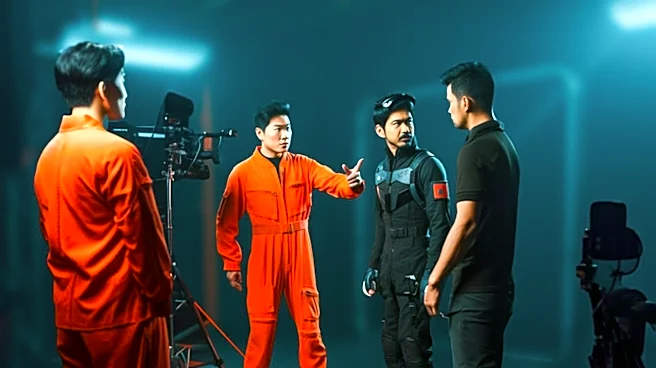
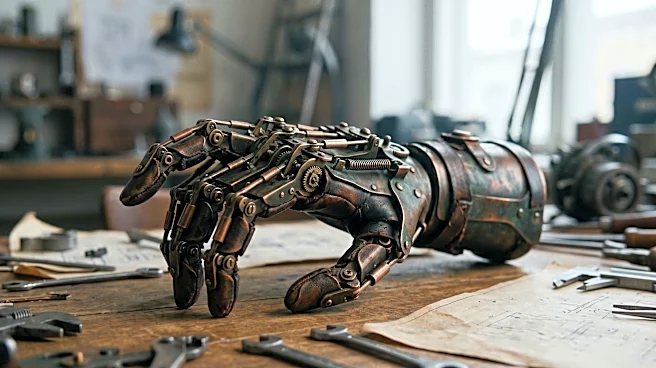
company Digital District will detail their methods and tools for incorporating artificial intelligence into the film's development and post-production phases. While AI was utilized in these stages, the actual filming employed traditional sets and methods. 'The Third Hand' is described as a 'fantastique' silent film in color, starring François Civil as a World War One soldier who receives a grafted German hand. The case study will be followed by a discussion with David Cormand, a Member of the European Parliament, focusing on AI regulation in Europe and the protection of creators' rights and cultural sovereignty.
Why It's Important?
The integration of AI in filmmaking, as demonstrated by Hazanavicius, marks a significant technological shift in the entertainment industry. This case study at Les Arcs will provide valuable insights into the practical application of AI in film production, potentially influencing future industry standards and creative processes. For US filmmakers and studios, understanding these advancements is crucial for maintaining competitiveness and exploring new creative avenues. The subsequent discussion on AI regulation and creators' rights is particularly important, as it addresses growing concerns within the creative community about job displacement, intellectual property, and ethical considerations surrounding AI-generated content. The outcomes of such discussions could shape future policies that impact how AI is developed and utilized in Hollywood and beyond, affecting artists, technicians, and legal frameworks.
What's Next?
Following the presentation at Les Arcs, the exclusive footage and detailed case study on AI integration in 'The Third Hand' will likely generate significant discussion within the global film industry, including in the US. Filmmakers, studios, and technology providers will be closely watching the reception and implications of Hazanavicius's approach. The discussion with MEP David Cormand could lead to further legislative proposals or industry guidelines regarding AI use in creative fields, potentially influencing international standards. As 'The Third Hand' progresses towards its release, its use of AI will be a key point of interest, offering a real-world example of how these technologies can be applied in feature film production. This could spur more widespread adoption or cautious evaluation of AI tools across the industry.
Beyond the Headlines
The use of AI in 'The Third Hand' transcends mere technological advancement; it delves into profound questions about the future of artistic creation and human-machine collaboration. This development highlights the ongoing tension between innovation and tradition in filmmaking, prompting a re-evaluation of the roles of human artists and AI tools. Ethically, the discussion around AI regulation and creators' rights touches upon the fundamental value of human creativity and the potential for AI to either augment or diminish it. Legally, the evolving landscape of AI-generated content raises complex intellectual property issues, particularly concerning ownership and attribution. Culturally, the acceptance and integration of AI in film could reshape audience expectations and the very definition of cinematic art, potentially leading to new genres and storytelling forms that were previously unimaginable.