






What's Happening?
Benjamin Edwards Inc. has significantly increased its holdings in Waste Management, Inc. (NYSE:WM), a leading North American provider of integrated waste management and environmental services. According to its most recent 13F filing with the Securities
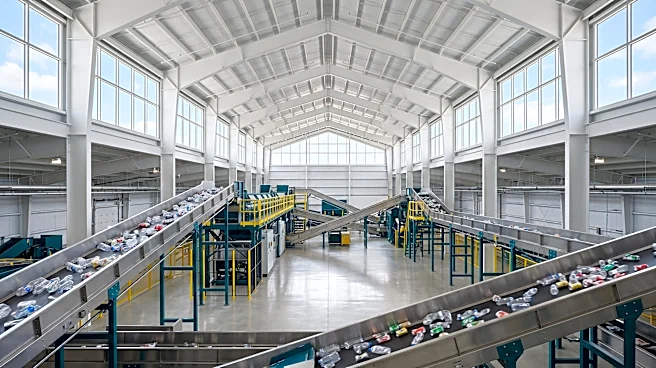
& Exchange Commission, the firm boosted its stake by 26.8% in the second quarter, acquiring an additional 20,675 shares. This acquisition brings Benjamin Edwards Inc.'s total ownership to 97,682 shares, valued at approximately $21,775,000. Waste Management, Inc. offers a comprehensive range of services including curbside and commercial waste collection, roll-off and temporary container services, materials recovery and recycling, and engineered landfill disposal. Headquartered in Houston, Texas, the company serves a diverse customer base across residential, commercial, industrial, and municipal sectors. Other institutional investors have also adjusted their stakes in WM, with several purchasing new positions or increasing their holdings, while some have reduced their investments. Overall, institutional investors collectively own 80.40% of Waste Management's stock.
Why It's Important?
This increased investment by Benjamin Edwards Inc. signals continued confidence in Waste Management, Inc.'s financial stability and growth prospects within the U.S. business services sector. The waste management industry is crucial for public health, environmental sustainability, and economic operations across the nation. As a major player, Waste Management's performance and investor interest reflect broader trends in infrastructure investment and environmental services. The company's integrated approach, covering collection to disposal and recycling, positions it as a critical component of the circular economy. Analyst ratings, which currently average a 'Moderate Buy' with an average target price of $258.89, further underscore the perceived value and potential of WM. The company's consistent dividend payouts and solid financial metrics, including a market capitalization of $87.89 billion and a PE ratio of 31.14, make it an attractive option for institutional investors seeking stable, long-term growth in essential services.
What's Next?
Waste Management, Inc. recently announced a quarterly dividend of $0.945, payable on September 25th to stockholders of record on September 11th. This represents an annualized dividend of $3.78 and a dividend yield of 1.7%. The company's dividend payout ratio stands at 53.54%, indicating a commitment to returning value to shareholders. Analysts project Waste Management, Inc. to post an EPS of 8.13 for the current year, suggesting continued profitability. The company's stock performance, with a 1-year low of $194.11 and a 1-year high of $248.13, will be closely watched by investors. Future movements in the stock price will likely be influenced by upcoming earnings reports, any changes in analyst ratings, and broader market conditions affecting the business services and environmental sectors. The company's ongoing operations in collection, recycling, and disposal will continue to be vital for communities and businesses across North America.
Beyond the Headlines
The sustained institutional interest in Waste Management, Inc. highlights the growing importance of environmental services in the U.S. economy. Beyond financial performance, the waste management sector plays a critical role in addressing environmental challenges such as pollution and resource depletion. Companies like Waste Management are at the forefront of developing and implementing sustainable practices, including advanced recycling technologies and efficient landfill operations. The increasing focus on environmental, social, and governance (ESG) factors in investment decisions further elevates the significance of companies that provide essential environmental services. As regulatory landscapes evolve and public awareness of environmental issues grows, the demand for comprehensive and sustainable waste management solutions is expected to increase, positioning Waste Management, Inc. as a key player in the nation's efforts towards a more sustainable future.