







What's Happening?
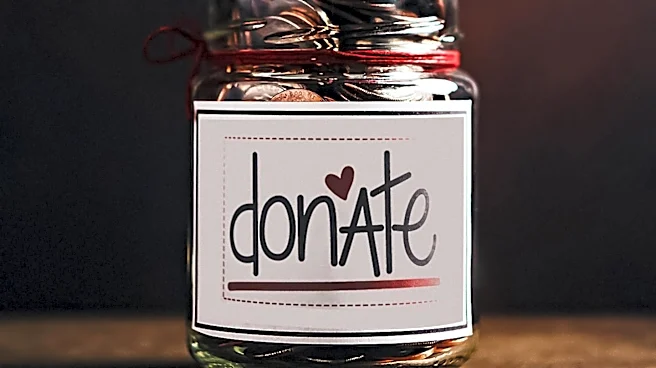
On October 30, the Broadway production of 'The Lost Boys' partnered with the New York Blood Center (NYBC) to host a Halloween-themed blood drive outside the Palace Theatre. The event successfully collected 49 blood donations, which have the potential
to benefit 147 hospital patients. In addition to the blood drive, a fundraiser for Broadway Cares/Equity Fights AIDS was held concurrently, raising over $4,000 for the organization that supports services for individuals with HIV/AIDS and other illnesses. Donors at the event were entered into a raffle to win tickets to 'The Lost Boys' and signed Broadway memorabilia. Jeannie Mascolino, NYBC's vice president of blood operations, noted that 75% of the donors at this event were first-time contributors, highlighting the success of such local partnerships in engaging new audiences for blood donation.
Why It's Important?
This initiative by 'The Lost Boys' musical is significant for several reasons. Firstly, it demonstrates the power of cultural institutions, like Broadway productions, to engage with public health initiatives and contribute to community welfare. By leveraging its platform and audience, the musical helped address the critical need for blood donations, especially by attracting a high percentage of first-time donors. This kind of partnership can serve as a model for other entertainment entities to participate in civic responsibility. Secondly, the dual fundraising effort for Broadway Cares/Equity Fights AIDS underscores the ongoing commitment of the Broadway community to charitable causes, particularly those related to health crises. Such events not only provide vital resources but also raise awareness for important health issues, fostering a sense of collective responsibility and community engagement among theatergoers and the general public. The success in attracting new donors is crucial for maintaining a stable blood supply.
Beyond the Headlines
Beyond the immediate impact of blood donations and fundraising, this event highlights the broader role of the arts in fostering social good and community cohesion. By integrating a public health campaign with an entertainment event, 'The Lost Boys' created a unique opportunity for civic participation that might not otherwise attract certain demographics. This blending of entertainment and philanthropy can help demystify and normalize acts of charity, making them more accessible and appealing to a wider audience. The high percentage of first-time donors suggests that creative outreach methods can effectively overcome barriers to participation in public health initiatives. Furthermore, such partnerships reinforce the idea that cultural industries are not just sources of entertainment but also active contributors to the social fabric, capable of mobilizing resources and inspiring collective action for critical causes. This model could encourage more cross-sector collaborations between the arts, healthcare, and non-profit organizations.