




What's Happening?
Synchrony Financial, a prominent U.S. consumer finance company, is under increased scrutiny as markets anticipate the November jobs report and the December Federal Reserve meeting. The company, which specializes in store cards and private-label credit,
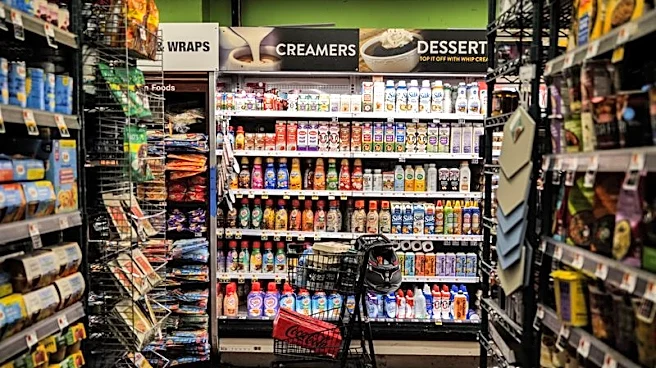
is directly tied to U.S. consumer demand, jobs, wages, and everyday spending. Synchrony Financial operates consumer finance partnerships for retailers and healthcare providers, generating approximately US$9.8 billion from thrift and savings activities and holding a market value of roughly US$21.4 billion. Investors are closely watching how higher interest rates will impact consumer credit appetite and Synchrony Financial's pricing power, especially given the current elevated volatility and frayed market nerves.
Why It's Important?
The performance of Synchrony Financial is a key indicator of the health of the U.S. consumer credit market and broader economic resilience. As a pure play on U.S. consumer demand, its trajectory reflects the impact of economic factors like employment rates, wage growth, and inflation on household spending. A downturn in consumer credit could signal broader economic challenges, affecting not only financial institutions but also the retail and healthcare sectors that rely on Synchrony's financing partnerships. Conversely, if credit remains healthy and long-term fundamentals play out positively, Synchrony Financial could outperform, suggesting a robust consumer base capable of weathering economic pressures. The outcome will influence investment strategies in domestic-oriented cyclical stocks.
What's Next?
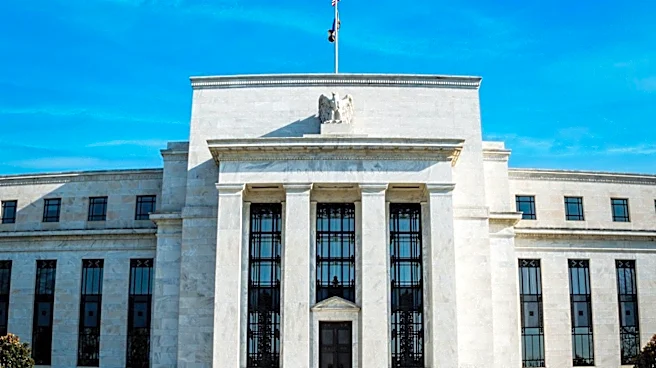
The immediate focus for Synchrony Financial and its investors will be the upcoming November jobs report and the December Federal Reserve meeting. These events are expected to provide crucial insights into the future direction of interest rates and the overall economic landscape. The company's ability to navigate potential shifts in credit cycles, funding costs, and consumer resilience will determine its long-term performance. Analysts will be closely examining how these macroeconomic factors influence Synchrony's earnings and revenue, with the potential for significant market reactions depending on the Federal Reserve's decisions and the jobs report's findings. The broader market will also be watching for signs of how much pressure higher rates could exert on U.S. domestic-oriented cyclical stocks.
Beyond the Headlines
The situation with Synchrony Financial highlights a deeper economic tension: the delicate balance between controlling inflation through higher interest rates and maintaining consumer spending, which is vital for economic growth. The company's business model, heavily reliant on consumer credit, makes it particularly sensitive to changes in economic policy and consumer behavior. This scenario could expose vulnerabilities in sectors heavily dependent on consumer financing, potentially leading to a re-evaluation of lending practices and risk management across the financial industry. The long-term implications could include shifts in how retailers and healthcare providers offer credit, potentially impacting access to goods and services for a significant portion of the U.S. population.