






What's Happening?
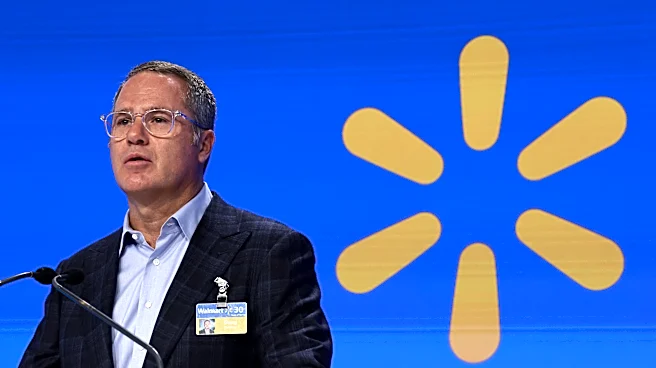
Doug McMillon retired as Walmart's president and CEO on January 31, 2026, concluding a career that began in 1984 as an hourly associate. John Furner succeeded him as CEO on February 1, 2026. McMillon's tenure as CEO, which started in February 2014, was
marked by his leadership in transforming Walmart into a more digitally integrated retailer. He guided the company through significant shifts in retail, focusing on the growth of digital commerce and adapting to evolving customer shopping habits. Under his leadership, Walmart invested in e-commerce and technology, enhancing the connection between physical stores and online shopping. This included expanding services like online ordering and store pickup, leveraging Walmart's extensive store network for digital fulfillment. McMillon also prioritized employee benefits, wages, and educational opportunities.
Why It's Important?
McMillon's leadership at Walmart is significant for its impact on the retail industry, particularly in the U.S. His strategic focus on digital transformation allowed Walmart to compete effectively with online retailers and maintain its market position. The integration of e-commerce with physical stores set a precedent for other traditional retailers, demonstrating a successful model for omnichannel business. This shift affected millions of consumers by offering more convenient shopping options and influenced the broader retail landscape by accelerating digital adoption. For employees, McMillon's emphasis on benefits and wages reflected a growing trend in corporate responsibility and employee investment, potentially influencing labor practices across the sector. His career trajectory, from an hourly associate to CEO, also serves as a notable example of internal career progression within a major U.S. corporation.
What's Next?
With John Furner taking over as CEO, Walmart is expected to continue its strategic direction of digital integration and omnichannel development. Furner's leadership will likely build upon the foundation laid by McMillon, further refining the balance between online and in-store experiences. The company will face ongoing challenges in the competitive retail market, including evolving consumer preferences, technological advancements, and supply chain complexities. Stakeholders, including investors, employees, and consumers, will be observing how Furner navigates these challenges and potentially introduces new initiatives to sustain Walmart's growth and market leadership. The transition marks a new chapter for one of the largest U.S. retailers, with implications for its vast workforce and customer base.
Beyond the Headlines
McMillon's retirement and the succession plan at Walmart highlight broader themes in modern business leadership, particularly the importance of long-term strategic planning and adaptability. His career exemplifies how deep operational experience, gained from entry-level positions, can be crucial for leading large organizations through periods of significant change. The emphasis on digital transformation under his leadership underscores the ongoing shift in consumer behavior and the necessity for traditional businesses to embrace technology to remain relevant. This transition also reflects the continuous evolution of corporate governance and the strategic decisions involved in leadership succession, ensuring continuity and innovation within major U.S. corporations. The legacy of his tenure will likely be studied as a case study in successful retail adaptation.