




What's Happening?
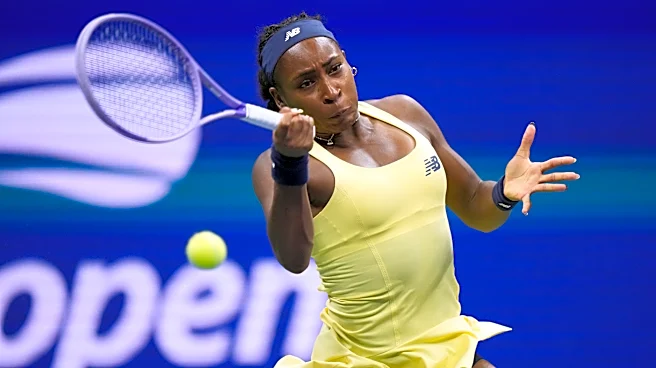
Corey Gauff, father of tennis star Coco Gauff, has publicly challenged the accuracy of an Instagram post that detailed what it claimed were the ten largest endorsement contracts for female athletes. The post, shared by 'Athlete,' listed several high-profile
deals, including Venus Williams's reported $40 million Reebok agreement in 2000 and Serena Williams's Nike deal from 2002, along with Maria Sharapova's reported $70 million Nike contract in 2010. Corey Gauff responded directly in the comments section of the Instagram post, stating, 'All of this is wrong.' The social media post also mentioned other agreements, such as Serena Williams's $13 million Puma deal in 1998 and softball player Monica Abbott's contract with the Scrap Yard Dawgs. The post acknowledged that the figures cited were never officially confirmed by the brands involved.
Why It's Important?
This dispute highlights a critical issue regarding the transparency and verification of financial information in women's sports, particularly concerning endorsement deals. The accuracy of reported earnings significantly influences public perception of female athletes' economic value and contributes to broader discussions about gender pay equity in sports. When figures are presented without official brand confirmation, as noted in the Instagram post, it can lead to misinformation and skewed comparisons. Corey Gauff's intervention underscores the importance of factual reporting and the potential impact of unverified claims on athletes' public image and financial narratives. For stakeholders in the sports industry, including athletes, agents, and sponsors, this incident emphasizes the need for clear and verifiable data to ensure fair and accurate representation of endorsement values.
What's Next?
The immediate consequence of Corey Gauff's dispute is increased scrutiny on how endorsement deals for female athletes are reported and perceived. This incident may prompt media outlets and social media platforms to exercise greater diligence in verifying financial claims related to athletes. It could also encourage brands and athletes to be more transparent about the terms of their endorsement contracts, or at least to provide clearer guidance on what information can be publicly shared. For Coco Gauff, whose 2025 earnings were estimated by Forbes at $33 million (with $25 million from sponsorships), this situation indirectly reinforces the importance of accurate financial reporting for current top-tier female athletes. The broader conversation about women's sports earnings will likely continue, with a renewed emphasis on reliable data.
Beyond the Headlines
Beyond the immediate controversy, this event touches upon deeper implications concerning the commercialization of sports and the representation of female athletes. The historical context of endorsement deals, as referenced in the disputed post, reveals how the market for female athletes has evolved. The lack of confirmed figures for past deals highlights a systemic issue where financial details, especially for women, may have been less transparent or rigorously reported compared to their male counterparts. Corey Gauff's challenge serves as a reminder that while progress has been made in recognizing the economic power of female athletes, there is still a need for greater accountability and accuracy in reporting their financial achievements. This incident contributes to the ongoing dialogue about equitable valuation and visibility for women in professional sports.