








What's Happening?
Viyona Fintech, a Hyderabad-based company, is in discussions with the Zimbabwean government to introduce its smartphone-based Tap & Pay platform. This initiative aims to enable small businesses in Africa to accept contactless payments using compatible
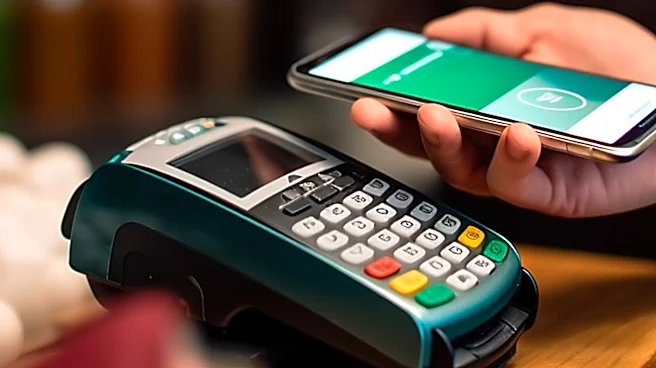
smartphones, eliminating the need for dedicated card machines. The company plans to deploy its NFC-enabled SoftPOS solution, which allows Android smartphones to function as contactless payment terminals. This technology is designed to reduce the upfront cost of accepting digital payments, making it accessible for small retailers and merchants. Zimbabwe is targeted as Viyona's initial market in sub-Saharan Africa, with the company seeking to partner with local acquiring banks, payment service providers, and merchant networks. The proposed rollout aligns with Zimbabwe's exploration of adopting India's Unified Payments Interface (UPI) technology, with the Reserve Bank of Zimbabwe reportedly in discussions with NPCI International Payments Ltd (NIPL).
Why It's Important?
This development signifies a growing trend in the global digital payments market, particularly in emerging economies. For U.S. businesses and financial institutions with interests in African markets, this represents an expansion of digital infrastructure and potential new avenues for commerce. The introduction of low-cost, smartphone-based payment solutions can significantly boost financial inclusion by enabling small and micro-enterprises to participate in the digital economy. This can lead to increased economic activity and formalization of transactions in regions where traditional banking infrastructure may be limited. The success of such platforms in Africa could also provide a blueprint for similar initiatives in other developing regions, potentially influencing U.S. foreign aid and investment strategies focused on economic development and digital transformation. Furthermore, the potential adoption of India's UPI technology in Zimbabwe highlights the increasing global influence of payment systems developed in other nations, which could impact the competitive landscape for U.S. payment technology providers.
What's Next?
The rollout of Viyona's Tap & Pay platform in Zimbabwe is contingent on regulatory approvals and the completion of necessary payment network certifications. If successful, Viyona plans to expand its operations to other African markets, leveraging its experience in India's digital payments ecosystem. The company will continue to engage with local financial institutions and payment service providers to integrate its technology. The discussions between the Reserve Bank of Zimbabwe and NPCI International Payments Ltd regarding UPI technology could pave the way for a broader digital payment ecosystem in the country, which Viyona's platform could complement. The commercial deployment in India and selected African markets will depend on securing these approvals and certifications. This initiative is part of a larger trend of African countries developing instant payment systems and expanding access to digital financial services, indicating a future where smartphone-based contactless payments become increasingly ubiquitous across the continent.
Beyond the Headlines
The push for smartphone-based contactless payments in Africa, exemplified by Viyona Fintech's efforts in Zimbabwe, carries significant long-term implications. Beyond economic growth, it addresses the ethical challenge of financial exclusion, providing tools for individuals and small businesses previously underserved by traditional banking. The reliance on smartphone technology for payments also highlights the increasing importance of mobile connectivity and digital literacy across the continent. There are potential legal and regulatory complexities in harmonizing these new payment systems with existing financial laws and ensuring consumer protection. Culturally, the adoption of such technologies could accelerate the shift away from cash-based economies, impacting traditional commerce practices. The success of these initiatives could also influence global standards for digital payments, potentially leading to greater interoperability between different national and international payment systems, which could have long-term effects on global trade and financial flows.