






What's Happening?
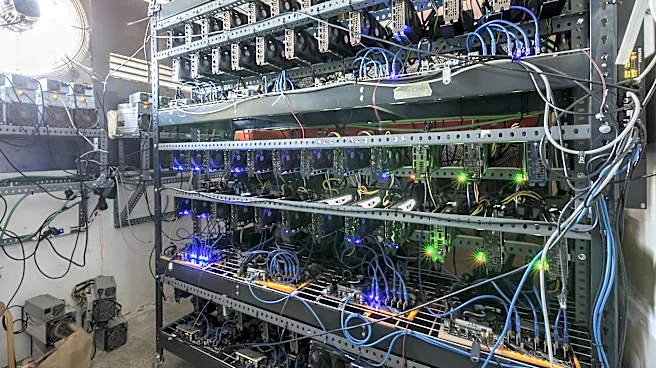
Tether, the issuer of the USDT stablecoin, has acquired an additional 3.72 million Class A shares of Bitdeer Technologies, a Bitcoin mining company, for approximately $10 million. This purchase, made on November 25 at an average price of $2.69 per share,
comes despite an 87% decline from the prices at which Tether previously sold Bitdeer shares in June. The investment increases Tether's total holdings to 41.45 million Class A shares. This move occurs during a broader selloff in Bitcoin mining stocks, driven by falling cryptocurrency prices and concerns about artificial intelligence infrastructure financing. However, Bitdeer's expanding AI cloud business, which boasts a $2.9 billion revenue backlog from signed customer commitments, suggests Tether's investment may be strategically aimed at more than just Bitcoin recovery. Bitdeer's third-quarter revenue increased by 89% year-over-year to $320.7 million, though net losses widened to $125.5 million, with significant capital expenditure directed towards data center construction and GPU procurement.
Why It's Important?
Tether's increased investment in Bitdeer highlights a significant trend in the cryptocurrency and technology sectors: the convergence of Bitcoin mining with artificial intelligence infrastructure. This strategic move by Tether, a major player in the stablecoin market, indicates a broader diversification strategy beyond its core stablecoin issuance. By investing in Bitdeer, Tether gains exposure to both Bitcoin production and the rapidly growing, competitive market for AI computing capacity. This could provide a hedge against volatility in the crypto market while capitalizing on the demand for AI infrastructure. For Bitdeer, Tether's continued investment, despite share dilution, provides capital and validates its pivot towards AI cloud services. The financial performance of companies like Bitdeer, which are redirecting resources towards AI, will be crucial in determining the profitability and sustainability of this dual-focus business model, impacting investors and the broader tech landscape.
What's Next?
The future trajectory for Bitdeer will likely involve continued expansion of its AI cloud business, aiming to convert its substantial $2.9 billion backlog into realized revenue. This will require significant capital expenditure for data center construction and GPU procurement, which could continue to impact its net profitability in the short term. Investors will be closely watching how Bitdeer manages rising financing costs and potential further shareholder dilution. The success of this strategy could influence other Bitcoin mining companies, such as MARA Holdings, which are also exploring AI infrastructure opportunities. For Tether, this investment signifies a continued commitment to diversifying its portfolio across cryptocurrency infrastructure, AI, energy, and precious metals, suggesting further strategic investments in these areas could be on the horizon. The long-term performance of Bitcoin and the demand for AI computing capacity will be key factors in the success of this investment.
Beyond the Headlines
Tether's investment in Bitdeer reflects a deeper shift in the digital asset ecosystem, where companies are increasingly seeking to leverage existing infrastructure for multiple high-growth sectors. The move from pure Bitcoin mining to integrating AI cloud services demonstrates an adaptive business model in response to market pressures and technological advancements. This convergence raises questions about the future of specialized crypto mining operations and whether a hybrid model, combining digital asset production with AI computing, will become the norm. The ethical and legal implications of such large-scale data center operations, particularly concerning energy consumption and environmental impact, will also become more prominent as these industries expand. Furthermore, the financial stability of companies like Bitdeer, with significant capital expenditures and widening net losses, underscores the inherent risks and speculative nature of investing in rapidly evolving technological frontiers.