








What's Happening?
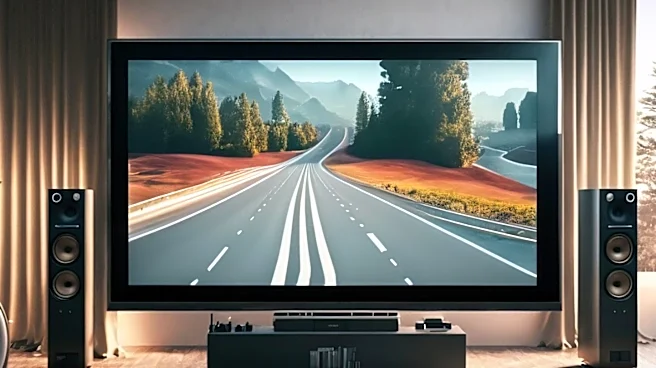
Determining the appropriate size for a television depends largely on the viewing environment, particularly the room size. While there's no definitive 'right' or 'wrong' answer, a 55-inch television is generally considered the largest comfortable fit for a cramped
apartment. In contrast, larger spaces might accommodate an 85-inch TV or even bigger. The '30-degree rule' suggests that a screen should fill 30 degrees of a viewer's field of vision from their sitting position. For a 55-inch TV, this rule recommends sitting approximately 7.5 feet away to achieve an immersive experience without excessive neck strain or squinting. Additionally, the '40-degree rule' aims for a cinema-like experience, suggesting a closer viewing distance for larger screens, such as 6.5 feet for a 65-inch TV.
Why It's Important?
Choosing the correct TV size is crucial for optimizing the viewing experience and preventing discomfort. An improperly sized TV can lead to eye strain, neck pain, or a less immersive experience. For consumers, understanding these guidelines helps in making informed purchasing decisions, ensuring that their investment in a new television aligns with their living space and viewing habits. For retailers and manufacturers, providing clear guidance on TV sizing can enhance customer satisfaction and reduce returns. The increasing popularity of larger screens, such as 65-inch TVs in the U.S., underscores the importance of these considerations as consumers seek more cinematic experiences at home.
Beyond the Headlines
Beyond the practical aspects of screen size and viewing distance, the discussion around optimal TV dimensions reflects broader trends in home entertainment and consumer technology. The desire for larger, more immersive displays speaks to a cultural shift towards creating cinema-like experiences within private residences. This trend is driven by advancements in display technology, making larger screens more accessible and affordable. It also highlights the evolving role of the television as a central hub for entertainment, gaming, and even smart home integration. As display technologies continue to advance, future considerations might include flexible screens, augmented reality overlays, or even more personalized viewing experiences tailored to individual preferences and environmental factors.