


What's Happening?
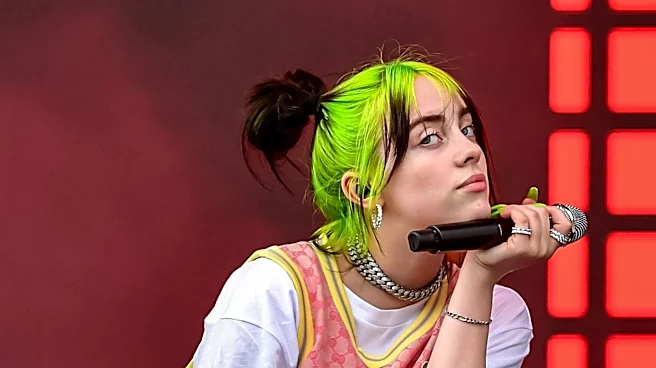
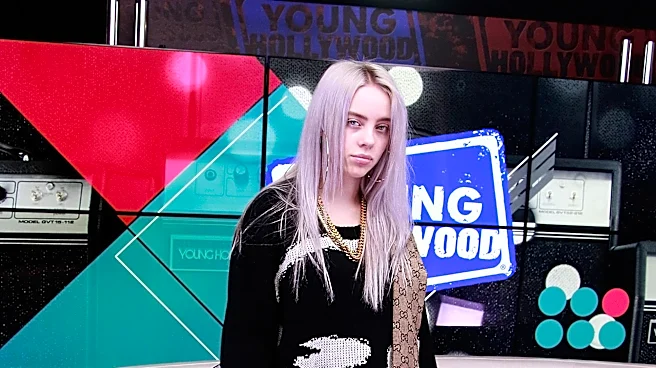
Billie Eilish has publicly discussed the double standards women face regarding body image, contrasting it with the perceived ease men experience. According to a Bored Panda article, Eilish claimed that men do not face body shaming because 'girls are nice,'
suggesting women are more critical of each other. This statement, made in a 2023 Variety interview, went viral and sparked considerable debate online. Eilish reflected on her experience growing up in the public eye since age 13, where her appearance, love life, and outfits were constantly scrutinized. She revealed that she initially wore baggy clothes to prevent people from visually accessing her body, feeling she wasn't strong or secure enough to show it. Her comments came after a significant public reaction when she wore a tank top at 16 and later when she transitioned from oversized to more fitted attire.
Why It's Important?
Eilish's comments highlight a significant societal issue concerning body shaming and gender-based scrutiny, particularly for women in the public eye. Her perspective underscores the immense pressure female celebrities face to conform to specific beauty standards, often leading to mental health challenges like anxiety, depression, and low self-esteem. While the internet debated her assertion that men are immune to body shaming, her experience brings to light the unique and heavy scrutiny women endure. This discussion is important for fostering a broader conversation about unrealistic beauty standards and their impact on individuals, regardless of gender. It also emphasizes the responsibility of public figures to consider the weight of their words, as their statements can influence public perception and contribute to ongoing dialogues about societal norms.
What's Next?
The ongoing discussion surrounding Billie Eilish's comments is likely to continue influencing conversations about body positivity, gender equality, and the pressures faced by public figures. While Eilish has expressed her views, the broader societal dialogue will continue to evolve as more voices contribute to the understanding of body image issues. This event may encourage other celebrities and public figures to share their experiences, potentially leading to increased advocacy for more inclusive and realistic beauty standards. The debate also serves as a reminder for media outlets and social media platforms to critically evaluate how they portray and discuss individuals' appearances, especially those in the public eye, to avoid perpetuating harmful stereotypes and double standards.
Beyond the Headlines
Beyond the immediate controversy, Eilish's remarks touch upon deeper cultural and ethical implications regarding public perception and individual autonomy. The intense scrutiny she faced from a young age raises questions about the ethical responsibilities of media and the public in consuming and commenting on celebrity lives. Her choice to wear baggy clothes to protect her body from visual access speaks to a broader issue of objectification and the struggle for personal agency in a highly visual and judgmental society. The debate also highlights the complexity of gender roles and expectations, where both men and women experience pressure related to their appearance, albeit in different forms. Ultimately, this conversation contributes to a larger societal shift towards challenging conventional beauty norms and promoting self-acceptance and respect for diverse body types.