




What's Happening?
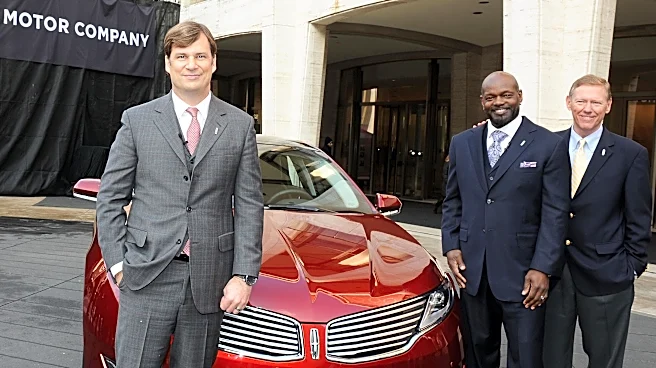
Ford CEO Jim Farley has issued a stark warning regarding the increasing global market share of Chinese automakers, suggesting that the U.S. auto industry could face significant challenges if it does not address this trend. Speaking at the Automotive News
Congress, Farley highlighted that Chinese brands now account for approximately a quarter of the market in Australia and 25% of vehicle sales in Mexico. He projects that China will export 11 million vehicles this year, a figure larger than the entire vehicle production in the United States. Farley pointed to Europe as an example where Chinese brands have gained significant traction with lower-priced vehicles, noting that it might be 'too late' for European manufacturers to effectively counter this influx. He emphasized the need for the U.S. to carefully consider how Chinese automakers might enter its market, raising concerns beyond just sales figures to include national security implications due to modern vehicles' advanced capabilities like self-driving features and video recording.
Why It's Important?
The growing influence of Chinese automakers poses a substantial threat to the U.S. auto industry, impacting domestic manufacturers like Ford, BMW, and Hyundai. The competitive advantage of Chinese vehicles, often priced 30% to 40% lower than their counterparts in some European markets, could lead to significant market disruption in the U.S. if similar conditions prevail. This situation could jeopardize American jobs, reduce the profitability of established U.S. auto companies, and potentially weaken the nation's industrial base. Beyond economic concerns, Farley also raised national security questions, suggesting that vehicles equipped with advanced technology could pose risks if controlled by foreign entities. The outcome of how the U.S. responds to this competitive pressure will determine the future landscape of its automotive sector and could have broader implications for manufacturing and technological sovereignty.
What's Next?
The U.S. currently has tariffs and regulations on connected vehicles that make it difficult for Chinese automakers to enter the market. However, the warnings from industry leaders like Jim Farley suggest that these measures may not be sufficient in the long term. The U.S. government and automotive industry stakeholders will likely need to evaluate existing policies and consider new strategies to protect domestic manufacturers and national interests. This could involve further trade discussions, potential adjustments to tariffs, or incentives for domestic innovation to compete with the cost advantages of Chinese brands. The debate will likely intensify regarding the balance between free market principles and national security concerns, as the U.S. decides its approach to a rapidly evolving global automotive landscape. The decisions made in the near future will shape the competitive environment for American automakers for decades to come.
Beyond the Headlines
The concerns raised by Jim Farley extend beyond immediate market competition, touching upon deeper geopolitical and technological implications. The rise of Chinese automakers signifies a shift in global manufacturing power and technological leadership, particularly in electric vehicles and autonomous driving. This shift could challenge the long-held dominance of traditional automotive nations like the U.S., Germany, and Japan. Furthermore, the integration of advanced technology in vehicles, such as self-driving capabilities and extensive data collection, introduces complex ethical and legal questions regarding data privacy, surveillance, and control. If foreign-made vehicles with such capabilities become prevalent in the U.S., it could necessitate new regulatory frameworks to address potential national security vulnerabilities and ensure consumer protection. The situation underscores a broader trend of economic competition intertwined with national security in an increasingly interconnected world.