




What's Happening?
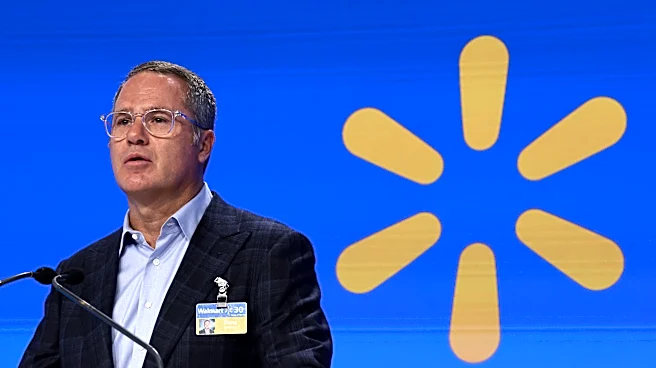
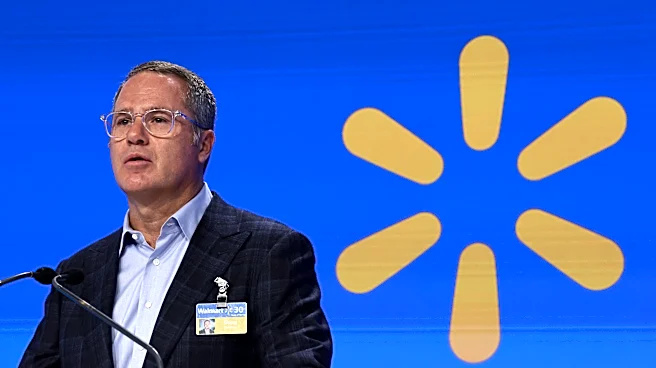
Walmart announced on November 14, 2025, that its President and CEO, Doug McMillon, then 59, would retire from his position on January 31, 2026. Following McMillon's retirement, John Furner, 51, is set to assume the roles of President and CEO of Walmart,
effective February 1, 2026. Furner immediately joined the company's board of directors upon the announcement. The transition plan includes McMillon advising Furner through fiscal year 2027, ensuring a smooth leadership handover. Additionally, Walmart plans to name a successor for the CEO of Walmart U.S. before the end of fiscal year 2026. Greg Penner, Chairman of Walmart, expressed confidence in Furner, stating he is the 'right leader to guide Walmart into our next chapter of growth and transformation.' This planned succession aims to provide clarity and stability during the leadership change.
Why It's Important?
This leadership transition at Walmart is significant for several reasons. As one of the world's largest retailers, a change in CEO can influence its strategic direction, operational efficiency, and market performance. John Furner's appointment signals a new era for Walmart, potentially bringing fresh perspectives on retail innovation, e-commerce expansion, and supply chain management. The planned handover, with Doug McMillon staying on as an advisor, suggests a focus on continuity and leveraging institutional knowledge, which can reassure investors and stakeholders. The decision to name a successor for Walmart U.S. before the end of fiscal 2026 also indicates a proactive approach to leadership development and organizational stability. This move could impact the competitive landscape of the retail sector, as Walmart's strategies under new leadership may influence industry trends and consumer behavior.
What's Next?
Following the announcement, John Furner will officially take over as President and CEO of Walmart on February 1, 2026. Doug McMillon will transition into an advisory role, supporting Furner through fiscal year 2027, which is expected to facilitate a seamless leadership transfer and strategic alignment. The company will also be focused on identifying and appointing a new CEO for Walmart U.S. before the end of fiscal year 2026, a key internal leadership decision. Stakeholders, including investors, employees, and competitors, will likely monitor Furner's initial strategic moves and any shifts in Walmart's operational priorities. The retail industry will observe how this leadership change influences Walmart's ongoing initiatives in areas such as digital transformation, customer experience, and market expansion.
Beyond the Headlines
The planned CEO succession at Walmart highlights a growing trend in corporate governance towards structured and transparent leadership transitions. This approach, characterized by a defined overlap period and advisory roles for outgoing executives, aims to minimize disruption and maintain organizational momentum. Such planned handovers can enhance investor confidence by demonstrating foresight and stability in leadership. It also underscores the importance of internal talent development, as Furner's promotion from within suggests a robust succession planning process. The transition could also signal broader strategic shifts within Walmart, potentially accelerating its focus on technology integration, sustainability initiatives, or new market penetration, as new leadership often brings a renewed vision for growth and adaptation in a rapidly evolving retail landscape.