
What's Happening?
Also, a spinoff company from EV manufacturer Rivian, has begun delivering its TM-B e-bikes to customers after experiencing delays. The company is positioning its e-bikes, priced between $3,500 and $4,500, as a viable alternative for local transportation,
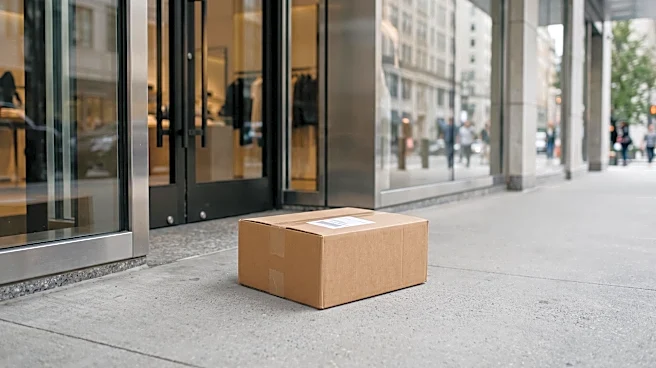
given the rising cost of new cars in the U.S., where the average vehicle transaction price exceeds $51,000. Chris Yu, cofounder and president of Also, stated that the e-bike is a precursor to future software-heavy products. Also originated as a project within Rivian before becoming an independent entity. The company's TM-B e-bike features a touchscreen, a removable battery, and a pedal-by-wire drivetrain. Also also partnered with DoorDash to develop autonomous delivery vehicles and secured $150 million in funding to advance various autonomous vehicle types for both people and goods. The initial delivery of the TM-B was delayed due to high demand for components like memory, chips, and high-performance circuit boards, which are also used in AI servers and robotics.
Why It's Important?
This development highlights a growing trend in the U.S. transportation market, where high vehicle costs are creating opportunities for alternative mobility solutions. As traditional car ownership becomes more expensive, companies like Also are stepping in to offer more affordable and specialized options for daily commutes and errands. The entry of a Rivian spinoff into the e-bike market, coupled with its focus on autonomous delivery vehicles, signals a broader shift towards diversified and sustainable urban transportation. This could impact the automotive industry by potentially reducing demand for conventional vehicles for short-distance travel, while also fostering innovation in the micro-mobility and autonomous delivery sectors. Consumers stand to gain from more varied and potentially cost-effective transportation choices, while traditional automakers might face increased competition from these emerging segments.
What's Next?
Also plans to continue developing and deploying multiple autonomous vehicle types for moving people and goods, leveraging its recent $150 million funding round. Chris Yu envisions a future where households utilize a combination of vehicles: a family SUV for long-distance travel, an e-bike for local trips like school drop-offs, and a yet-to-be-announced autonomous product for tasks such as grocery runs. The company's focus on software-heavy products suggests ongoing innovation in vehicle technology and user experience. Also will likely continue to address supply chain challenges, particularly concerning components used in AI servers and robotics, to ensure timely delivery of its products. The success of Also's e-bikes and future autonomous offerings could influence other automotive manufacturers and tech companies to explore similar diversified transportation solutions, potentially leading to a more integrated and multimodal urban mobility ecosystem.
Beyond the Headlines
The emergence of companies like Also, driven by the high cost of traditional vehicles, points to a fundamental re-evaluation of personal transportation in the U.S. This shift is not merely about offering cheaper alternatives but about optimizing vehicle use for specific purposes, moving away from the 'one-size-fits-all' approach of conventional cars. The integration of e-bikes and autonomous delivery vehicles into daily life could lead to significant changes in urban planning, infrastructure development, and consumer behavior. It also raises questions about the future of car ownership, the environmental impact of diversified fleets, and the regulatory frameworks needed to accommodate new forms of mobility. The emphasis on software and autonomous capabilities suggests a future where transportation is increasingly intelligent, connected, and tailored to individual needs, potentially reducing traffic congestion and carbon emissions in urban areas.