







What's Happening?
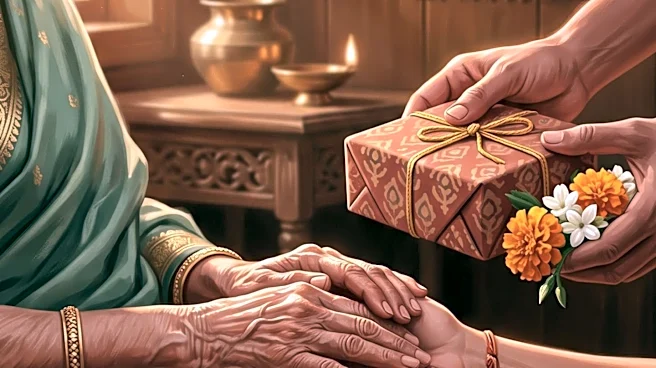
Many individuals over the age of 70 are engaging in a deliberate process of decluttering and giving away their belongings, a trend that psychologists attribute to a profound shift in perspective. This is not merely random tidying but a conscious effort
to curate a 'material legacy,' where the act of passing on objects and their associated stories becomes more important than retaining them. This phenomenon is often linked to the concept of 'symbolic immortality,' where individuals seek to ensure their memory and life story endure through the items they entrust to others. Gerontologists refer to the collection of personal items accumulated over a lifetime as a 'material convoy,' and for many seniors, the later years involve a thoughtful 'editing' of this convoy. This practice is also influenced by 'Swedish death cleaning' (döstädning), a method of organizing one's possessions while still healthy enough to make decisions about their fate.
Why It's Important?
This trend has significant implications for families and caregivers, as it represents a proactive approach to end-of-life planning that can ease the burden on descendants. By intentionally distributing cherished items, seniors can share the narratives behind their possessions, fostering deeper connections and ensuring that their personal histories are preserved. This process can also be practically beneficial, as it helps to downsize homes, making them safer and easier to manage, and prevents the emotional difficulty of clearing a packed house after a funeral. However, it's crucial to distinguish healthy, intentional gifting from patterns that might signal exploitation or cognitive decline, such as giving away essential items or large assets under pressure. Recognizing these distinctions is vital for ensuring the well-being and safety of older adults, prompting family members and professionals to intervene if concerning patterns emerge.
What's Next?
As this psychological shift becomes more recognized, there may be an increased emphasis on supporting seniors in their decluttering and legacy-building efforts. This could involve encouraging open conversations within families about the stories behind objects and facilitating the transfer of meaningful possessions. For those over 70, adopting practices like Swedish death cleaning, which involves working room by room and involving trusted individuals, can make the process feel shared rather than isolating. Conversely, greater awareness is needed to identify and address instances where gifting patterns are not genuinely voluntary or are indicative of vulnerability. Caregiving groups and elder-law professionals will continue to play a crucial role in educating families on how to respond with both gratitude and appropriate boundaries, ensuring that the generosity of older adults is truly their choice and not a symptom of undue influence or cognitive impairment.
Beyond the Headlines
Beyond the practical and emotional benefits, this trend touches upon deeper cultural and philosophical aspects of aging and legacy. In a consumer-driven society, the act of consciously divesting oneself of material possessions can be seen as a re-evaluation of what truly holds value. It highlights a shift from accumulation to meaning-making, where objects become conduits for memory and connection rather than mere possessions. This phenomenon also challenges the traditional narrative of inheritance, transforming it from a post-mortem distribution into a living, interactive process. The emphasis on 'symbolic immortality' suggests a fundamental human desire to leave a lasting imprint, and for many, this is achieved not through grand achievements but through the intimate transfer of personal history embedded in everyday objects. This trend could lead to a broader societal conversation about how we value and pass on our personal histories.