

What's Happening?
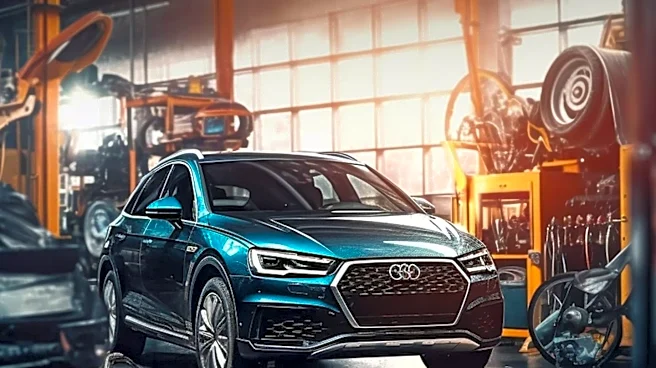
Audi's flagship A8 sedan is reportedly set to share a platform and factory with the next generation Porsche Panamera, according to an Automotive News report citing the German newspaper Heilbronner Stimme. This move would secure the future of a flagship sedan for both
luxury brands within the VW Group, mirroring the current arrangement for the electric Porsche Taycan and Audi E-Tron GT. The next A8 is expected to be built at a Porsche plant in Leipzig. The current A8 is slated to end production next year, creating a three-year gap in Audi's top-tier lineup before the new model's production begins around 2030. During this interim, Audi plans to direct customers towards its new flagship Q9 SUV.
Why It's Important?
This strategic decision by the VW Group highlights a growing trend of platform sharing and consolidation within the automotive industry, particularly among luxury brands. For U.S. consumers, this could mean a more streamlined product offering from Audi and Porsche, potentially leading to efficiencies in development and manufacturing that could influence pricing or feature sets. The three-year hiatus for the Audi A8 could shift luxury sedan market share towards competitors or Audi's own Q9 SUV, impacting sales and brand perception in the U.S. market. The move also reflects a broader industry effort to optimize resources and reduce costs, especially in the face of increasing investment in electric vehicle technology and evolving consumer preferences.
What's Next?
The current Audi A8 will cease production next year, leading to a three-year period without a flagship sedan from Audi. During this time, Audi will promote its new Q9 SUV as the primary option for customers seeking a high-end vehicle. Production of the new A8, sharing its platform with the Porsche Panamera, is anticipated to commence around 2030. This timeline suggests that consumers interested in the next iteration of the A8 will need to wait several years. The shared platform strategy could also lead to further integration of manufacturing processes and supply chains between Audi and Porsche, potentially impacting their respective U.S. operations and dealer networks.
Beyond the Headlines
The decision to share platforms and factories between luxury brands like Audi and Porsche, while driven by cost-efficiency, also raises questions about brand distinctiveness and market positioning. For U.S. consumers, the perceived exclusivity and unique driving experience of each brand could be subtly altered if core components are increasingly shared. This trend could lead to a more homogenized luxury vehicle market, where differentiation relies more on design and software than underlying engineering. It also underscores the immense financial pressures on automakers to innovate in electric vehicles while maintaining profitability in traditional segments, potentially leading to more such collaborations across the industry.