



What's Happening?
Mercedes Team Principal Toto Wolff has stated that the team's slower pace in car development and upgrades, compared to rivals like McLaren and Ferrari, is due to budget limitations. Despite Mercedes extending its championship leads, its raw pace has diminished,
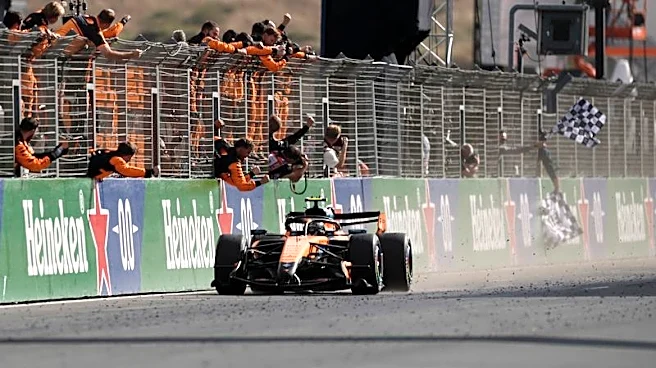
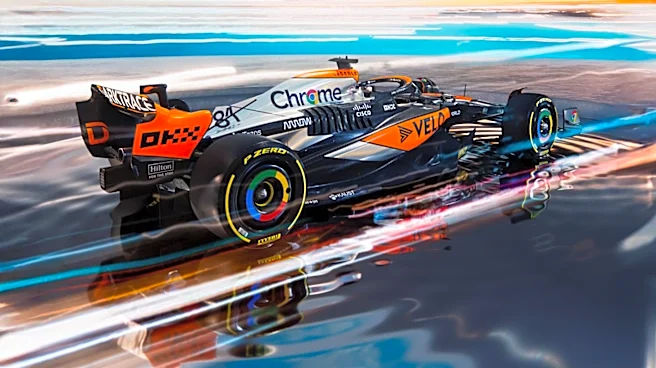
with McLaren winning the last two races after introducing significant upgrades. Mercedes, in contrast, has made only minor revisions to its W17 car since its last major package at the Canadian Grand Prix in late May. Wolff explained that all teams operate under a yearly budget cap, which was raised to $215 million for 2026, and Mercedes opted for an even spread of spending throughout the season rather than front-loading development. He also referenced reliability issues earlier in the season that cost the team valuable points, suggesting these problems consumed resources that could have been allocated to further development. McLaren team principal Andrea Stella, however, expressed skepticism about Wolff's claims, pointing to a specific allowance in the cost cap rules related to the incoming 2027 power unit regulations.
Why It's Important?
This situation highlights the critical role of budget caps in Formula 1 and their impact on team strategies and competitive dynamics. The cost cap, designed to level the playing field and promote financial sustainability, forces teams to make difficult decisions about resource allocation throughout the season. Mercedes' decision to spread its development budget evenly, while rivals like McLaren appear to have front-loaded their spending, demonstrates differing philosophies under the new financial regulations. This could significantly influence the championship outcome, as a rapid pace of upgrades can provide a crucial competitive advantage. The debate also underscores the strategic importance of reliability, as unforeseen issues can consume valuable budget and divert resources from performance enhancements. For U.S. audiences, particularly those interested in the business and strategic aspects of sports, this provides insight into how financial regulations in global sports impact competition and innovation, affecting the performance of major teams and potentially shifting the balance of power in the sport.
What's Next?
The coming races, particularly the Italian Grand Prix at Monza, will be a crucial test for Mercedes. While Monza's high-speed nature differs from recent circuits, Mercedes drivers Kimi Antonelli and George Russell acknowledge that McLaren is currently the team to beat. Mercedes is expected to bring further upgrades, and the effectiveness of these developments will determine if they can regain their competitive edge. The ongoing debate about budget allocation and the interpretation of cost cap rules, particularly the allowance for 2027 power unit regulations, may continue to be a point of contention among team principals. The performance of teams in the latter half of the season will reveal whose spending strategy was more effective under the current regulations. Ultimately, the championship battle will likely be decided by which team can most efficiently develop and deploy performance-enhancing upgrades within the financial constraints.
Beyond the Headlines
The discussion around Mercedes' budget constraints and upgrade pace delves into the deeper implications of financial regulations on innovation and competitive parity in high-tech sports like Formula 1. While cost caps aim to prevent runaway spending and create a more level playing field, they also introduce a new layer of strategic complexity. Teams must not only innovate technically but also manage their finances with extreme precision, making trade-offs between immediate performance gains and long-term development. This can lead to a 'development race' where the ability to efficiently allocate resources becomes as crucial as engineering prowess. The skepticism from McLaren's team principal, Andrea Stella, regarding Wolff's claims, also highlights the inherent gamesmanship and strategic communication within F1, where teams often downplay their capabilities or financial flexibility to gain a psychological edge. This dynamic reflects the broader competitive landscape in business, where resource management and strategic positioning are key to sustained success.