








What's Happening?
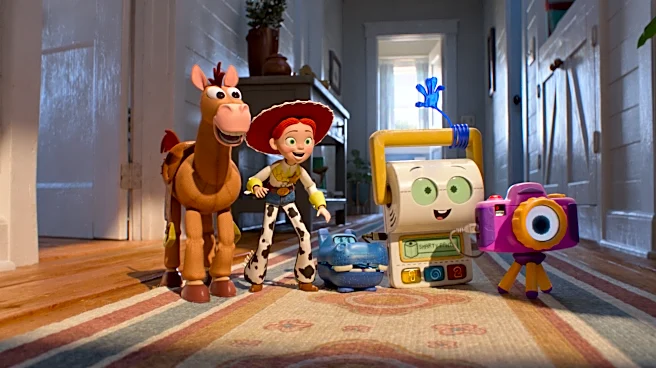
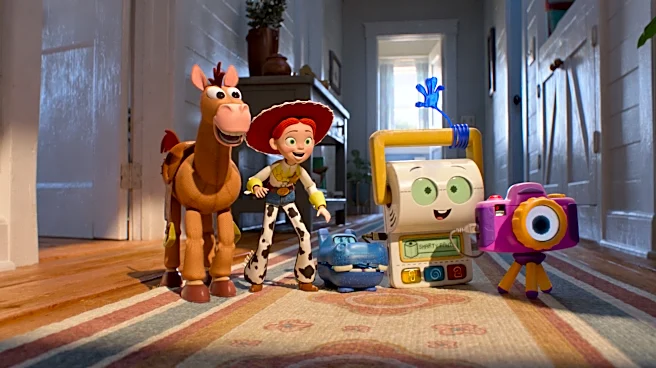
Pixar's 'Toy Story 5' marks a significant return to the beloved franchise, with Joan Cusack's character, Jessie the Cowgirl, taking center stage. Directed by Andrew Stanton, the film explores the challenges faced by toys in a digital age where children
are increasingly absorbed by screens. The story follows Jessie as she attempts to help Bonnie, an 8-year-old girl struggling to make friends, by encouraging physical play over screen time. The film introduces new characters, including a smart tablet named Lilypad, which becomes a central part of Bonnie's life, sidelining her toys. The narrative delves into the emotional journey of Jessie as she grapples with the fear of being abandoned by another child, reflecting on her past experiences with previous owners.
Why It's Important?
The film addresses a contemporary issue faced by many families: the impact of technology on children's social development. By highlighting the importance of physical play and interaction, 'Toy Story 5' offers a poignant commentary on the need for balance between digital and real-world experiences. This message resonates with parents and educators concerned about the effects of excessive screen time on children's growth and social skills. The film's exploration of these themes underscores the enduring relevance of the 'Toy Story' franchise in addressing societal changes and challenges.
What's Next?
As 'Toy Story 5' hits theaters, it is likely to spark discussions among parents, educators, and policymakers about the role of technology in children's lives. The film may influence future content aimed at children, encouraging creators to incorporate messages about the importance of physical play and social interaction. Additionally, the movie's success could lead to further installments in the franchise, continuing to explore relevant themes and issues.
Beyond the Headlines
Beyond its entertainment value, 'Toy Story 5' raises ethical questions about the responsibility of toy and tech companies in shaping children's experiences. The film's portrayal of toys as advocates for children's well-being highlights the potential for storytelling to influence public perceptions and behaviors. It also prompts reflection on the cultural shift towards digital engagement and its long-term implications for childhood development.