






What's Happening?
The U.S. economy is anticipated to continue its expansion in 2027, with an expected inflation-adjusted growth rate of approximately 2.5%. This projection is supported by solid household and corporate finances, sustained consumer spending, and significant
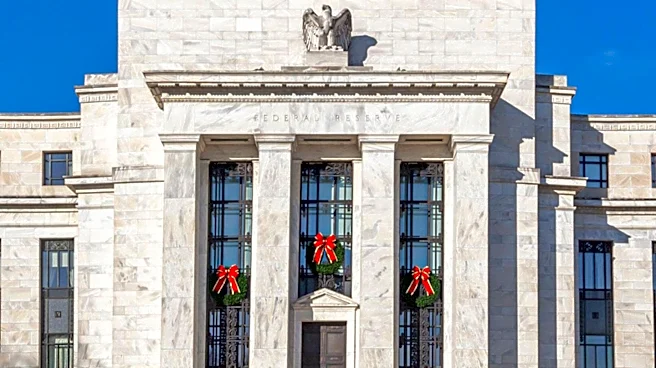
business investment, particularly in artificial intelligence (AI) initiatives. However, the economic path is not without obstacles, as persistent inflation, elevated interest rates, and potential energy supply disruptions are expected to weigh on momentum. Trade and geopolitical tensions also contribute to overall uncertainty. While inflation is likely to remain high in the coming months, potentially leading to additional interest rate hikes by Federal Reserve officials, consumer borrowing costs, especially mortgage rates, have already risen considerably. Consumer spending, which accounts for nearly 70% of U.S. economic activity, remains a crucial support for growth, with income and spending growing at sustainable rates and manageable debt payments. Corporate balance sheets are generally strong, with low debt loads by historical standards, enabling businesses to navigate economic uncertainties.
Why It's Important?
The forecast for continued economic growth in 2027, despite inflationary pressures and high interest rates, underscores the resilience of the U.S. economy. The emphasis on AI-related business investment highlights a significant driver of future productivity and economic transformation, indicating a shift in capital allocation towards advanced technologies. The stability of household finances and consumer spending is critical, as it forms the backbone of economic activity. However, the challenges posed by persistent inflation and elevated interest rates could temper consumer spending and impact interest-sensitive sectors like housing. The ability of businesses to maintain strong balance sheets and invest in AI initiatives will be key to offsetting potential slowdowns in household demand. This outlook suggests a complex economic environment where technological innovation and financial prudence are essential for navigating ongoing macroeconomic headwinds.
What's Next?
Federal Reserve officials may consider additional interest rate hikes if inflation remains elevated, although the impact of such actions on economic growth is expected to be limited given current consumer borrowing costs. Consumer spending is projected to remain a source of economic support, but its pace could be moderated by persistent inflation and higher interest rates. Business investment, particularly in AI, is expected to continue driving growth, potentially offsetting any moderation in household demand. Companies will likely continue to allocate significant capital to AI initiatives, seeking productivity gains. The economic trajectory in 2027 will largely depend on how these factors—inflation, interest rates, consumer behavior, and AI investment—interact and evolve. Monitoring these indicators will be crucial for businesses, investors, and policymakers in adapting their strategies.
Beyond the Headlines
The intertwining of AI investment with broader economic health presents a new paradigm for growth, where technological advancements are not just incremental but foundational. The substantial corporate spending on AI initiatives suggests a long-term commitment to digital transformation, which could lead to significant productivity improvements across various sectors. However, this also raises questions about the equitable distribution of these gains and the potential for job displacement in certain areas. The resilience of consumer spending, despite economic pressures, might also reflect a changing consumer psychology, where immediate gratification or essential needs outweigh concerns about future economic uncertainties. The ongoing geopolitical tensions and energy supply disruptions add layers of complexity, potentially influencing inflation and interest rate decisions beyond purely domestic economic factors. This dynamic environment necessitates a holistic approach to economic policy, considering both technological innovation and global interconnectedness.