


What's Happening?
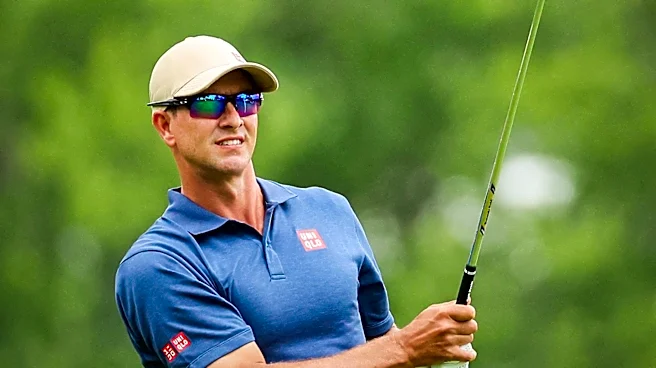
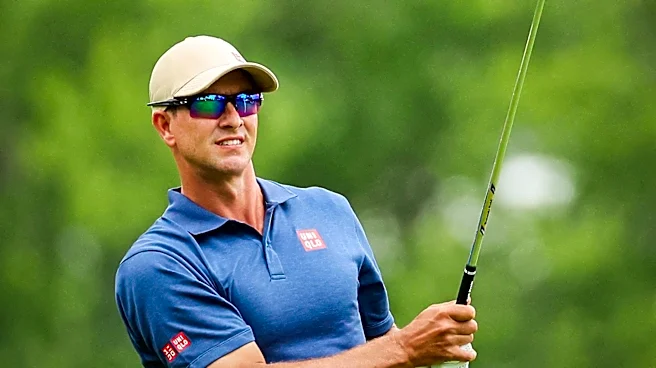
During an appearance on the Wake Up Barstool Podcast, professional golfer Wyndham Clark recounted a humorous interaction involving Adam Scott, a renowned PGA Tour player. According to Clark, Scott was approached by a young golf fan who, upon being introduced
to Scott as 'one of the best golfers to ever play,' immediately asked, 'can you beat Grant Horvat?' This question highlights the growing influence and recognition of YouTube golf personalities among younger audiences, potentially overshadowing traditional professional golfers in their perception. Clark expressed his support for the YouTube golf phenomenon, acknowledging its role in promoting golf generally and complementing the PGA Tour's efforts. The anecdote suggests a generational shift in how golf is consumed and who is considered a prominent figure in the sport, with online content creators gaining significant traction among youth.
Why It's Important?
This incident underscores a significant shift in the golf landscape, particularly concerning fan engagement and the evolving definition of 'professional' in the sport. The fact that a young fan would compare a PGA Tour veteran like Adam Scott to a YouTube golfer like Grant Horvat indicates that digital platforms are creating new pathways for golf viewership and celebrity. This trend could impact the PGA Tour's marketing strategies, potentially prompting them to collaborate more with online influencers or adapt their content to appeal to a younger, digitally native audience. For traditional golf media and sponsors, it signals a need to understand and engage with these new forms of golf content to remain relevant. The rise of YouTube golf also presents opportunities for broader participation in the sport, as it makes golf more accessible and relatable to a demographic that might not typically follow traditional tournaments.
What's Next?
The growing popularity of YouTube golf and its impact on fan perception may lead to increased integration of digital content creators within the broader golf ecosystem. We might see more collaborations between PGA Tour players and YouTube golfers, or even official PGA Tour initiatives aimed at leveraging the reach of these online personalities. Golf organizations may also invest more in digital content creation and social media engagement to capture the attention of younger fans who are increasingly consuming sports through platforms like YouTube. This could involve creating shorter, more dynamic content tailored for online viewing, or featuring behind-the-scenes access that resonates with digital audiences. The success of figures like Grant Horvat could also inspire more aspiring golfers to pursue careers in online content creation alongside or instead of traditional professional play.
Beyond the Headlines
This anecdote points to a broader cultural shift in how expertise and authority are perceived in the digital age. For younger generations, 'best' might not solely be defined by traditional metrics like tournament wins or world rankings, but also by online presence, entertainment value, and relatability. This challenges established hierarchies within sports and other fields, suggesting that influence can now be cultivated outside traditional institutions. The rise of YouTube golf also raises questions about the future of sports media consumption, as audiences increasingly gravitate towards personalized, on-demand content. This could lead to a more fragmented media landscape where traditional broadcasters compete with individual creators for viewership, forcing a re-evaluation of content strategies and distribution models across the sports industry.