
What's Happening?
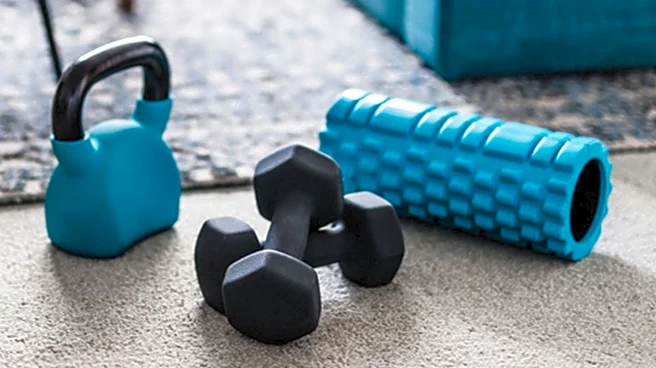
A 30-minute full-body resistance training workout has been designed to build functional strength using only dumbbells, with all exercises performed standing. This routine targets major muscle groups, including
glutes, quads, hamstrings, biceps, shoulders, back, and core, while also improving balance and stability. Key exercises include dumbbell squat and hammer curl, staggered deadlift and back row, split lunge, dumbbell front raise and Svend press, lateral lunge, overhead tricep extension, and squat with rotational press. The workout is structured with timed intervals of 40 seconds work and 20 seconds rest, repeated for three sets across all seven exercises. It is suitable for all fitness levels, recommending dumbbell weights between 5-30 lbs depending on individual strength.
Why It's Important?
This workout is significant for promoting accessible and efficient strength training, particularly for individuals who prefer or require standing exercises, or those with limited space for floor work. By focusing on functional movements and engaging multiple muscle groups, it offers a comprehensive approach to building strength, improving metabolism, and reducing the risk of cardiovascular disease. The emphasis on dumbbells makes it a practical option for home workouts, aligning with the growing trend of at-home fitness. For the fitness industry, such routines highlight the demand for versatile, low-impact, and time-efficient programs that cater to a broad audience, including beginners and those seeking to maintain fitness without a gym. This approach can lead to better adherence to exercise regimens and improved overall public health.
What's Next?
The popularity of efficient, full-body, standing resistance training workouts is likely to continue growing, leading to more diverse program offerings from fitness professionals and platforms. We can expect to see further innovations in dumbbell-based exercises and routines that maximize functional strength and balance. Online fitness communities and video platforms will continue to be key channels for sharing and accessing these workouts, potentially incorporating more interactive and personalized elements. As awareness of the benefits of resistance training increases, there may also be a greater demand for educational content on proper form and progressive overload techniques for home exercisers, ensuring safety and effectiveness.
Beyond the Headlines
This workout routine transcends simple physical exercise by addressing broader lifestyle needs, such as time constraints and space limitations, which often hinder consistent fitness engagement. Its all-standing format can be particularly beneficial for older adults or individuals with mobility issues that make floor exercises challenging, promoting inclusivity in fitness. The focus on functional strength—movements that mimic daily activities—has long-term implications for maintaining independence and quality of life. Ethically, by making strength training more accessible and less intimidating, such programs contribute to a more equitable health landscape, empowering individuals to take proactive steps towards their well-being regardless of their circumstances. It also subtly shifts the narrative from purely aesthetic goals to health and functional capacity.