
What's Happening?
Nine Energy Service, Inc. announced its third-quarter 2026 financial results, reporting $142 million in revenue and $8.3 million in adjusted EBITDA. The company's cementing business demonstrated strong
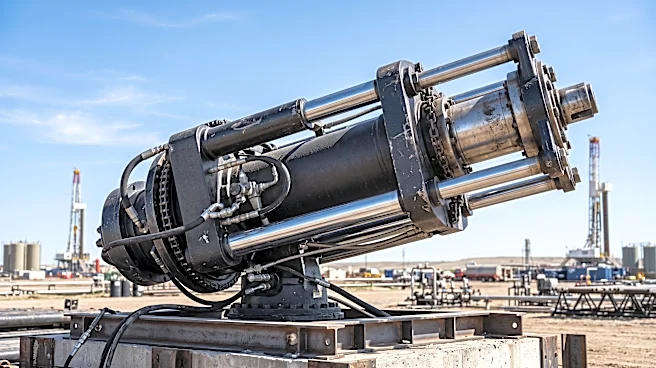
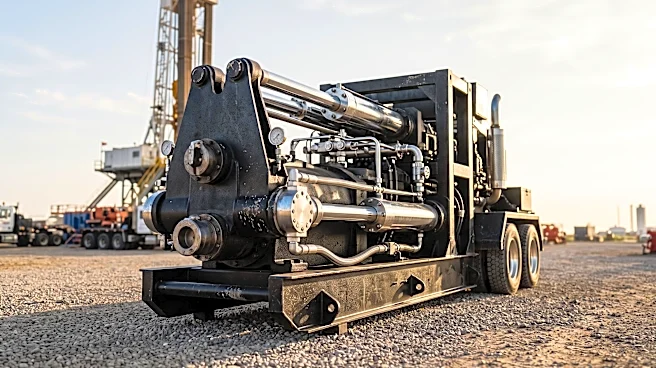
performance, achieving double-digit growth and outpacing the U.S. rig count due to sustained customer demand and market share gains. This growth was partially offset by operational challenges, specifically a large-diameter coiled tubing unit that remained out of service for maintenance throughout the quarter, impacting revenue and profitability in that segment. Additionally, completion tools revenue saw a sequential decline as elevated international activity from the second quarter did not recur. Despite these mixed results, Nine Energy Service is strategically shifting its focus from liquidity preservation to returns-oriented operational management, leveraging its improved balance sheet post-restructuring. The company is also making investments in a new completion tools testing facility, expected to be operational in the first half of 2027, to enhance research, development, and manufacturing capabilities.
Why It's Important?
The earnings report from Nine Energy Service provides insight into the dynamics of the U.S. oilfield services sector. The strong performance of its cementing business, often considered a leading indicator for broader completions activity, suggests potential positive momentum for other completion-oriented businesses in the coming quarters. This indicates a potential uptick in demand within the energy sector, which could benefit other service providers and indirectly impact oil and gas production levels. The company's strategic shift towards profitability and returns, including exiting low-return wireline operations, reflects a broader industry trend where companies are optimizing portfolios for efficiency and higher margins. The investment in a new testing facility underscores the importance of technological advancement and product innovation in maintaining competitiveness and expanding market share, particularly in high-pressure, high-temperature environments and international markets. This focus on R&D could lead to more efficient and reliable tools for well completion, influencing operational costs and effectiveness across the industry.
What's Next?
Nine Energy Service anticipates continued activity improvement into the fourth quarter, with its cementing business expected to benefit from sustained customer demand. The company projects fourth-quarter revenue to be in the range of $137 million to $147 million, expecting flat revenue but increased profitability compared to the third quarter. This projected increase in profitability is attributed to a shift in revenue towards higher-margin cementing and international tools businesses. A key factor for the near-term outlook is the expected return to service of the large-diameter coiled tubing unit in December, which could restore full operating capacity. Looking further ahead into 2027, Nine Energy Service sees multiple avenues for growth, including improving U.S. activity, the full return of its coiled tubing capacity, continued commercialization of new completion tools products, and the operational launch of its new testing facility. The company is also preparing for good completions activity in 2027 by strategically managing its inventory in anticipation of supply chain challenges.
Beyond the Headlines
The strategic decisions made by Nine Energy Service, such as exiting unprofitable wireline operations and investing in advanced testing facilities, highlight a significant evolution within the oilfield services industry. This shift reflects a move away from simply maximizing revenue at all costs to a more disciplined approach focused on sustainable profitability and technological leadership. The emphasis on developing dissolvable products for international markets, particularly in challenging environments like the Vaca Muerta in Argentina and unconventional plays in the UAE, points to a growing demand for innovative solutions that reduce operational complexities and costs in global energy production. Furthermore, the company's focus on the Haynesville Shale, a key market for LNG exports and high-temperature dissolvable tool technology, underscores the interconnectedness of domestic energy production with global energy demands and geopolitical factors. This strategic alignment with high-growth, high-value basins and international opportunities suggests a long-term vision for resilience and expansion in a volatile energy landscape.