





What's Happening?
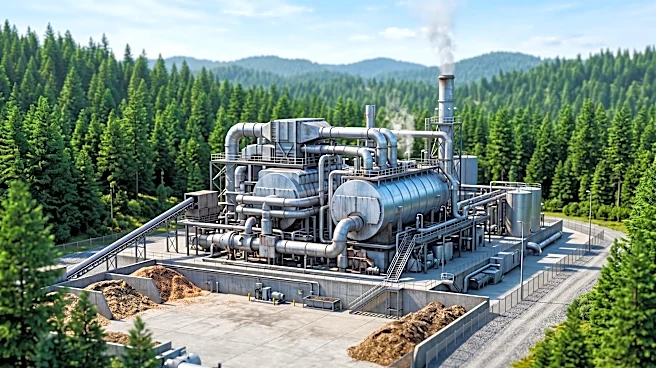
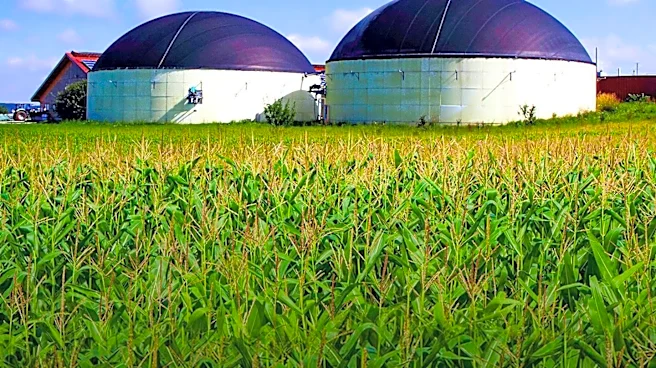
Reliance Industries, chaired by Mukesh Ambani, plans to invest approximately $1.6 billion (150 billion Indian rupees) to construct 100 biogas plants across India by 2030. This initiative aims to significantly increase the company's biogas production from
agricultural residue. Currently, Reliance operates 45 biogas plants across 10 Indian states, generating about 350 metric tons of biogas daily. The expansion seeks to boost output to 5 million cubic meters of gas per day by the end of the decade. By March 2027, the company intends to have 10 new biogas plants operational, increasing production to 1.1 million metric tons, equivalent to 1.5 million to 2 million cubic meters per day. The company will strategically locate these plants in areas with abundant agro-residue availability.
Why It's Important?
This substantial investment by Reliance Industries underscores a significant commitment to renewable energy within India, aligning with the country's broader goals for a greener and more energy-secure future. The development of 100 new biogas plants will contribute to reducing reliance on fossil fuels and mitigating environmental impact by utilizing agricultural waste. This move also positions Reliance as a key player in India's bioenergy sector, potentially stimulating further investment and innovation in the industry. The increased production of compressed biogas will provide a sustainable energy source for various sectors, contributing to India's energy independence and its target of achieving Net Carbon Zero status by 2035. The project also creates economic opportunities in rural areas where agro-residue is prevalent.
What's Next?
Reliance Industries will proceed with the phased development of its biogas plants, with an immediate goal of establishing 10 plants by March 2027. The company will continue to identify and secure locations for the remaining plants based on the availability of agricultural residue. This expansion is expected to attract further attention and investment in India's bioenergy sector, potentially leading to more collaborations and technological advancements. The Indian Biogas Association has already noted significant investment commitments in the sector, indicating a growing momentum. As Reliance scales up its operations, it will likely influence policy discussions around renewable energy incentives and infrastructure development in India.
Beyond the Headlines
The ambitious biogas expansion by Reliance Industries highlights a broader global trend towards sustainable energy solutions and waste-to-energy initiatives. This project not only addresses energy demands but also tackles agricultural waste management, offering a dual benefit. The scale of this investment by a major conglomerate like Reliance could serve as a model for other large corporations in developing economies, demonstrating the viability and profitability of green energy projects. Furthermore, the focus on utilizing agricultural residue could foster new agricultural practices and supply chain efficiencies, creating a circular economy model within the agricultural sector. This initiative also contributes to India's climate change commitments on an international stage, showcasing its proactive approach to environmental sustainability.