



What's Happening?
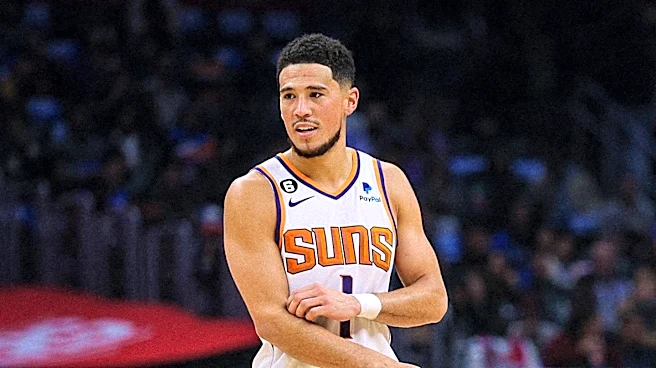
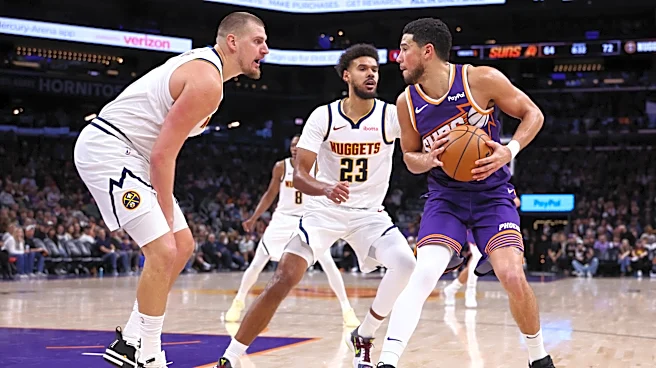
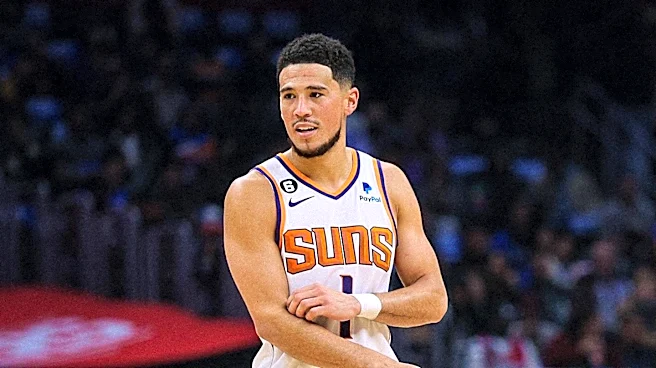
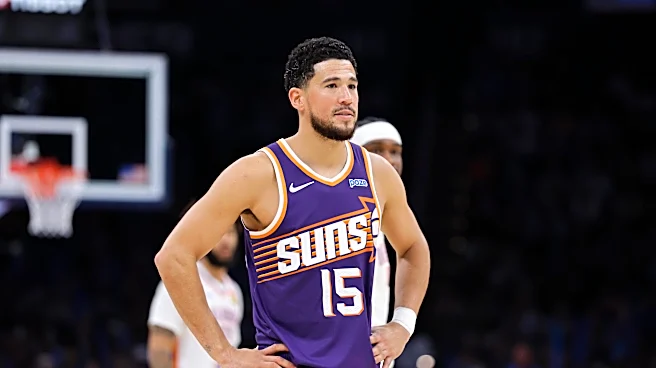
Phoenix Suns owner Mat Ishbia has emphatically stated that star player Devin Booker will not be traded, despite ongoing speculation and his upcoming 30th birthday. Ishbia, who acquired the team in February 2023, has consistently expressed his dedication
to building a championship team around Booker. In an August video, when asked about trading Booker to the Detroit Pistons, Ishbia responded, 'When I’m dead. Devin Booker will never be a Detroit Piston.' He reiterated this stance in an April news conference, proclaiming that Booker 'is going to lead us to a championship here in Phoenix' and that he would 'ride into a fire with Devin Booker.' This strong commitment comes as Booker enters his 12th NBA season, having become the Suns' all-time leading scorer and a five-time All-Star. Despite his individual achievements, including an NBA Finals appearance in 2021, the team has faced challenges, leading to questions about its future direction and Booker's role.
Why It's Important?
Mat Ishbia's unwavering commitment to Devin Booker is crucial for the Phoenix Suns' organizational stability and future planning. By publicly shutting down trade rumors, Ishbia signals to fans, players, and potential free agents that Booker is the franchise cornerstone. This clarity can help mitigate locker room uncertainty and foster a more cohesive team environment, especially as the Suns navigate early-season struggles and questions about their point guard situation. For Booker, this vote of confidence from ownership reinforces his status as the team's leader and primary offensive weapon, potentially boosting his morale and focus. The decision also impacts the team's long-term strategy, as it suggests the Suns will continue to build around Booker, potentially through further trades for complementary pieces, rather than pursuing a full rebuild. This approach carries significant financial implications, given Booker's substantial contract through the 2029-2030 season, and ties the franchise's immediate success directly to his performance and leadership.
What's Next?
Moving forward, the Phoenix Suns will likely continue to seek solutions to their on-court challenges, particularly addressing the perceived lack of a true point guard to organize their offense. With Mat Ishbia's firm stance on Devin Booker, any future roster moves will aim to complement Booker's skills and enhance the team's championship aspirations. This could involve exploring trade opportunities for playmakers or defensive specialists, utilizing any remaining draft capital, or developing current young talent. The team's performance in the current season will be critical in validating Ishbia's commitment and Booker's leadership. Should the Suns struggle significantly, pressure may mount on the coaching staff and general manager to make adjustments, but a trade involving Booker appears to be off the table. The focus will remain on optimizing the roster around Booker to achieve playoff success and ultimately contend for an NBA championship, as envisioned by the owner.
Beyond the Headlines
Mat Ishbia's public declaration regarding Devin Booker extends beyond typical team management; it reflects a broader trend in sports ownership where owners take a highly visible and vocal role in shaping franchise identity and direction. This hands-on approach can be a double-edged sword: while it provides clear leadership and stability, it also places immense pressure on the chosen star player and the organization to deliver results. The 'never trade Booker' stance creates a long-term narrative for the Suns, intertwining the team's fate with Booker's career trajectory. This commitment also has cultural implications for the fanbase, solidifying Booker's legacy as a 'Valley icon' and fostering a deeper connection between the player and the community. Ethically, it demonstrates a loyalty that is increasingly rare in professional sports, potentially influencing how other teams approach their star players. However, it also means that if the team fails to achieve its goals, the owner's unwavering support for one player could become a point of contention.